
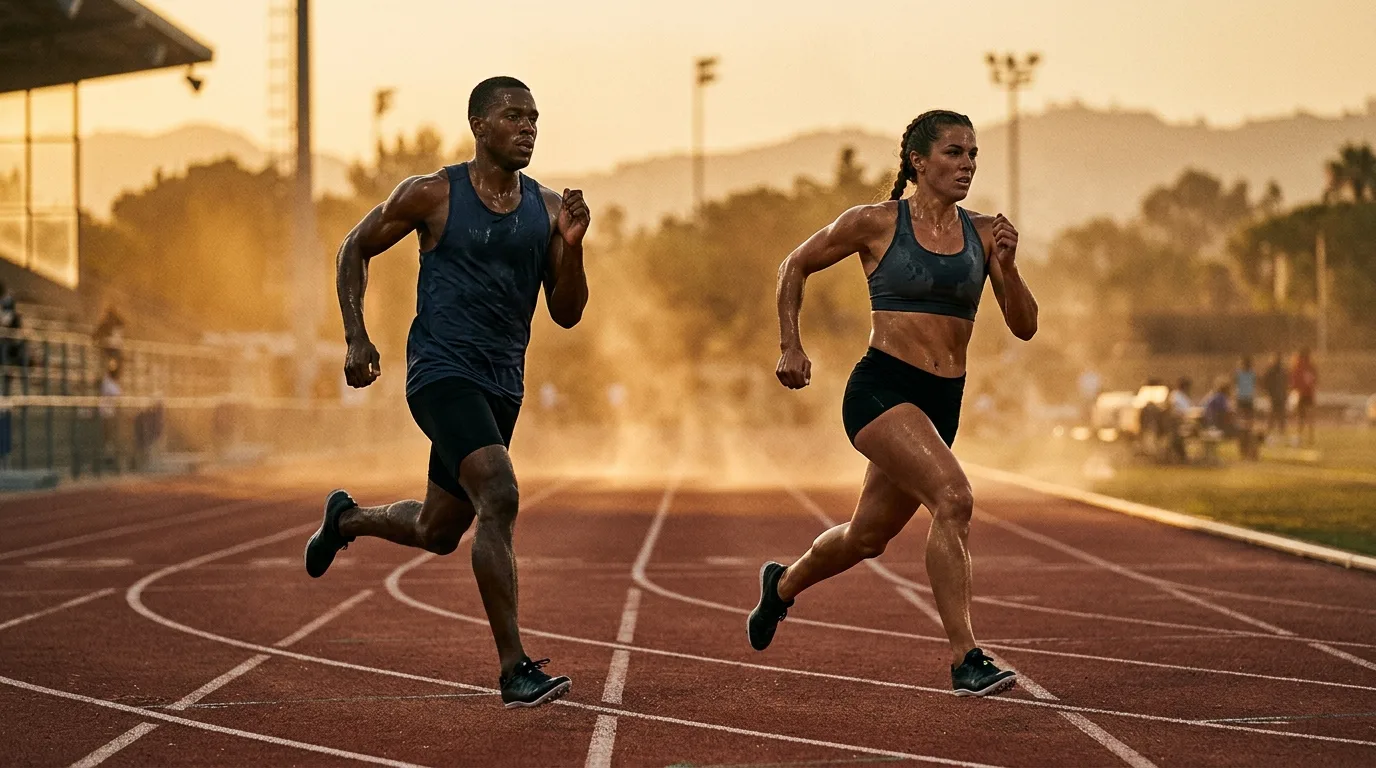
Europe just lived through one of its most severe heatwaves on record. Parts of France broke 106°F in June, a record last set in 1947. Rome, Florence, Milan, and a dozen other Italian cities hit the highest heat alert level. Emergency rooms in the UK restricted services to life-threatening cases only because of the surge in heat-related demand. Now it's the US's turn. As of this week, a heat dome is sitting over the central and eastern US heading into the July 4th weekend, affecting more than 100 million people. Heat index values are hitting 108°F in Washington DC, 109°F in Detroit, 111°F in New York and Nashville, and similar numbers across Michigan, Illinois, Indiana, and Missouri. Overnight lows aren't dropping much either, which matters more than people realize, since a body that never gets a break from heat overnight has less capacity to handle the next day. Most of the advice circulating during heatwaves is generic: drink water, stay in the shade. That's not wrong, but it's not the full picture, and it skips the details that actually change outcomes: how much electrolyte replacement really helps (and why the answer is different for everyone), whether that ice-cold neck bandana is helping or hurting, and what to actually do in the first few minutes if you notice heat is affecting someone. Here's what the research says, broken down by what you need if you're just trying to get through your day, and what you need if you're still trying to train.
First, the Science: Why Heat Is So Dangerous
Your body cools itself mainly by sweating and letting that sweat evaporate. When it's humid as well as hot, sweat can't evaporate efficiently, so this cooling system stalls out even though you're still losing fluid. That's why humidity is factored into heat risk right alongside temperature. Sports medicine and occupational health both use a measure called Wet Bulb Globe Temperature (WBGT) to capture this combined risk, since it accounts for humidity and radiant heat from the sun, not just air temperature. Sports medicine guidance generally treats a WBGT above roughly 82°F as high risk and recommends cancelling outdoor endurance events once it crosses about 90°F, since at that point the body's cooling system can no longer keep pace regardless of fitness level.
For Everyday Life: Getting Through a Heatwave Safely
How to spot heat affecting someone, and what to actually do. Heat-related illness moves along a spectrum, and knowing which stage you're looking at changes what to do next.
- Heat cramps (early stage): muscle cramps, usually in the legs or abdomen, during or after exertion. What to do: stop activity, move to a cool place, drink water or a sports drink, and wait for cramps to resolve before resuming. Get medical help if cramps don't ease within an hour, or if the person has heart problems or is on a low-sodium diet.
- Heat exhaustion (escalating): heavy sweating, cold or pale or clammy skin, a fast but weak pulse, weakness or dizziness, nausea or vomiting, and headache. Body temperature is usually still in the 98.6 to 104°F range. What to do: move the person to shade or air conditioning immediately, loosen or remove excess clothing, have them sip cool water, and actively cool them with a cool bath, damp cloths, or splashed water on the skin. They should feel clearly better within an hour; if not, escalate.
- Heat stroke (emergency): body temperature above 103 to 104°F, hot skin that's dry or only damp, a fast and strong pulse, and confusion, slurred speech, or fainting. This is the point where the body's cooling system has effectively shut down. What to do: call emergency services immediately, move the person to shade, and begin active cooling (cool water, ice packs at the neck, armpits, and groin) while waiting for help. Only give fluids by mouth if the person is fully awake and able to swallow; never give fluids to someone who is confused or unconscious.
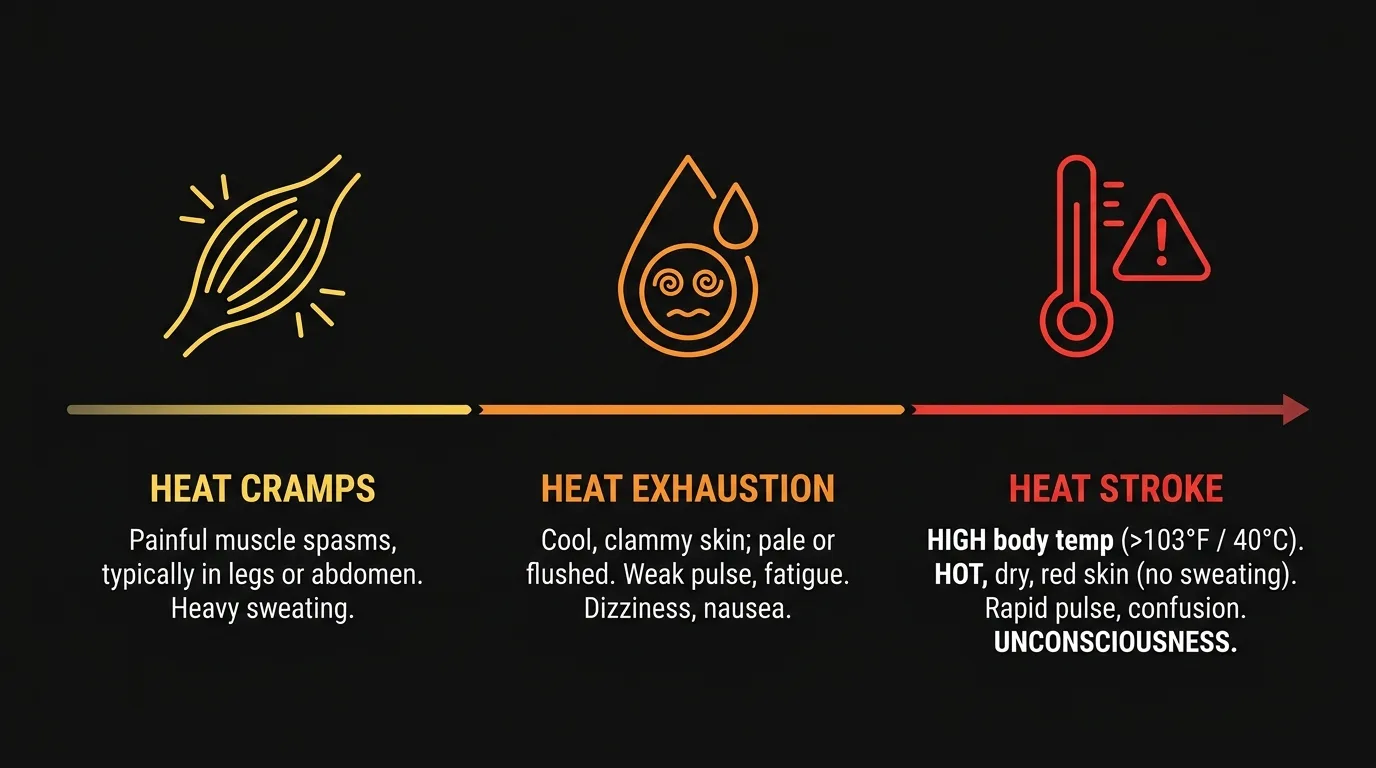
The line between exhaustion and stroke is confusion. A person who is sweating heavily and tired but still making sense is likely in the exhaustion stage. A person who seems disoriented, is slurring words, or isn't acting like themselves is a medical emergency regardless of how hot their skin feels.
- Rethink the fan. A fan feels like an obvious fix, but health guidance is more specific than "turn on a fan." Once indoor temperatures climb above roughly 90 to 95°F, a fan can actually accelerate heat buildup in the body instead of cooling it. Below that threshold, fans are genuinely useful because moving air speeds up sweat evaporation.
- Front-load your hydration, don't chase it. By the time you feel thirsty, you're already behind. This matters even more for older adults, since aging blunts both the thirst signal and the body's ability to sweat efficiently, on top of common medications (diuretics, beta blockers) that interfere with temperature regulation.
- Watch your medications, not just your water bottle. Several common medications change how your body handles heat or fluid balance, including diuretics, beta blockers, and GLP-1 drugs (which can also make very cold water harder to tolerate due to nausea). If you're on any of these, this is worth a quick conversation with your doctor before a heatwave hits, not during one.
- Protect the people who can't protect themselves. Children and older adults are disproportionately at risk. Never leave kids, pets, or anyone medically vulnerable in a parked car, even briefly. Check in on older neighbors or relatives, especially anyone living alone or without air conditioning.
- Time your exposure. Limit outdoor activity between roughly 10am and 4pm when possible, and use shade deliberately. Shade alone can drop how hot a space feels by more than 10°C compared to direct sun.
For Athletes: Training Smarter, Not Just Tougher
- Heat acclimatization is real, but it takes longer than most people think. Multiple lines of research converge on roughly 10 to 14 days of consistent heat exposure to trigger the core adaptations that matter: expanded blood plasma volume, a lower core temperature threshold for sweating to kick in, and reduced sodium loss in sweat. A few hot runs before a race won't get you there.
- Don't just hope you're acclimatized, build it deliberately. The most effective method is active: exercising in the heat at a submaximal intensity, gradually increasing duration or intensity each session. Passive heat exposure (saunas, hot baths) can produce some of the same physiological markers, but the evidence for translating that into actual performance gains is weaker and less consistent than active heat training.
- Salt matters more than people assume, but the right amount is genuinely individual. Sweat sodium losses vary enormously between people. Research on marathoners and trained athletes has found sweat sodium concentrations ranging from roughly 200 mg to 2,000+ mg per liter of sweat, and total sweat rate itself can range from about 0.3 to 4 liters per hour depending on the person, the heat, and the intensity. That's not a small range: two people doing the identical workout in identical conditions can have wildly different sodium needs.
- Because of that variability, sports nutrition bodies (the Academy of Nutrition and Dietetics, Dietitians of Canada, and the American College of Sports Medicine) don't give one universal number. Their general guidance is to consider added sodium during exercise if you have a high sweat rate (above about 1.2 liters/hour), notice visible salt residue on your skin or clothing ("salty sweater"), or are exercising for more than 2 hours. Where a specific target is given, it's generally in the range of roughly 500 to 1,000 mg of sodium per hour for high sweat-rate athletes in the heat, with the important caveat that this is a starting range to fine-tune, not a fixed prescription. For those who want precision, a sweat test (available through some sports medicine and performance labs) can measure your individual sweat sodium concentration directly, since the variability between individuals is too wide for generic tables to reliably apply to any one person.
- The practical version: if you know you're a "salty sweater" (white residue on dark clothing or skin after a workout is a reliable sign), lean toward the higher end of that range and consider testing. If you sweat lightly or aren't sure, start conservatively and adjust based on how you feel, since over-supplementing sodium can cause GI distress just as under-supplementing can contribute to cramping and, in rare extreme-duration cases, hyponatremia.
- Hydrate before you're already in the heat. Standard sports medicine guidance is to drink roughly 6 mL of fluid per kilogram of body weight every 2 to 3 hours in the 4 to 6 hours before training or competing in heat, so you start already hydrated instead of trying to catch up mid-session.
- Use WBGT, not just the temperature app. If you have access to a WBGT reading (many weather apps now include one), use it to decide whether to train outside at all, and how to modify intensity or break frequency if you do. This is a more accurate risk signal than air temperature alone, especially in humid conditions.
- Pre-cooling with a cold drink has real research behind it, with specifics that matter. Multiple controlled studies show that ingesting an ice slurry (a mix of ice and liquid, not just a cold drink) 20 to 30 minutes before exercise in the heat measurably lowers core temperature at the start of a workout and extends time to exhaustion, in some trials by 10 to 20 percent compared to a warm drink. The effective dose in most studies was substantial, roughly 7 to 14 grams of ice slurry per kilogram of body weight (for a 150 lb / 68 kg person, that's about 1 to 1.5 liters), which is more than most people casually drink before a workout. A smaller, more practical amount still helps with perceived effort and thermal comfort even if the core-temperature effect is modest. The mechanism is straightforward: melting ice absorbs heat as it changes state, giving you a bigger cooling effect per ounce than an equivalent amount of merely cold water. One caution from the research: drinking a large volume of ice slurry can cause GI discomfort for some people, so it's worth practicing this in training before using it on race day.
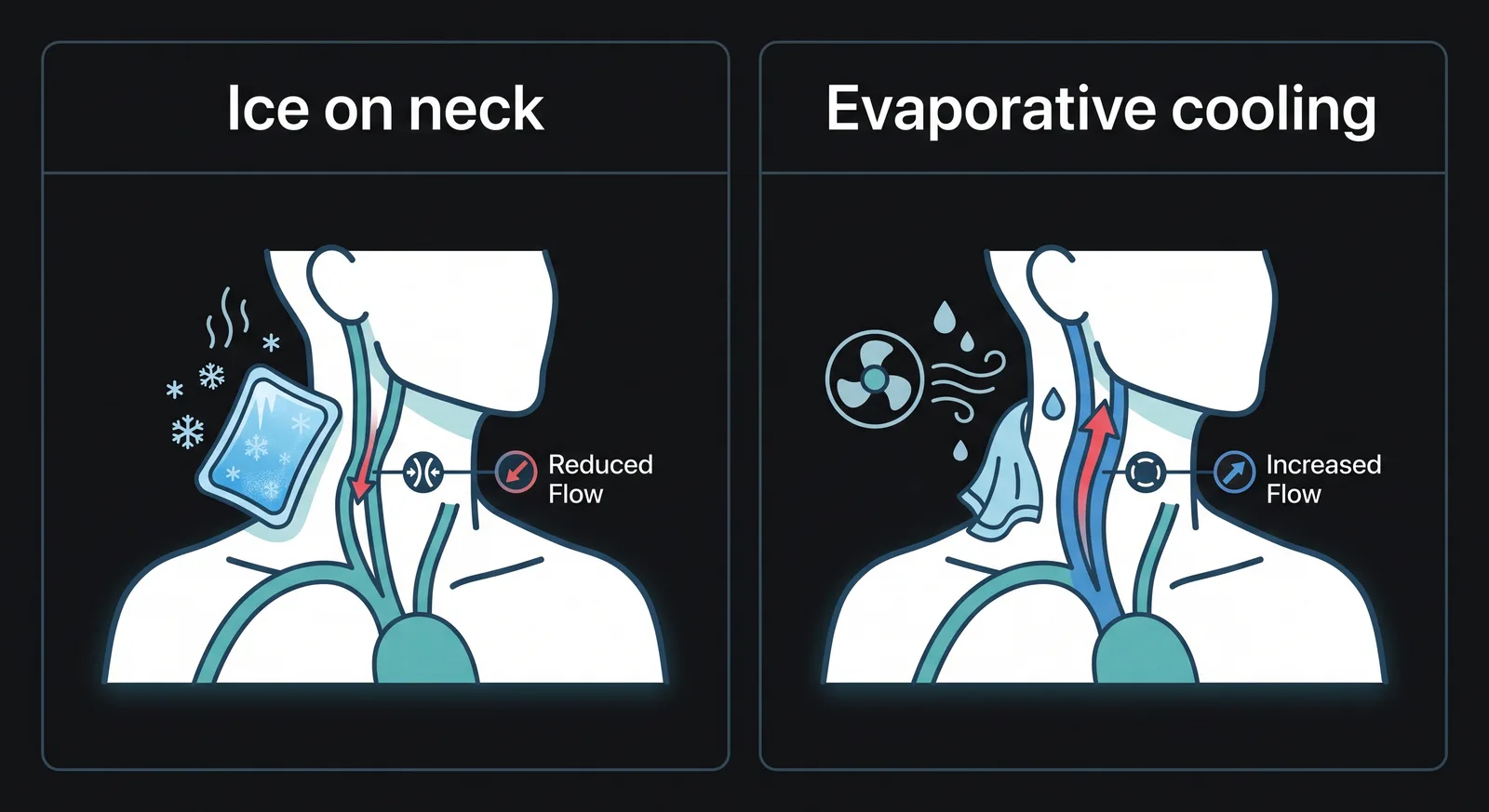
- The ice bandana can backfire. This one surprises people. Wrapping ice or an ice-cold pack directly around the neck targets the carotid arteries, which sit close to the skin and carry thermally sensitive receptors. Cooling that spot hard enough can trick the brain into reading "the body is dangerously cold," triggering vasoconstriction, a reflexive narrowing of blood vessels, right when you actually want blood flow to the skin to help dump heat. The practical alternative: cooling methods that increase evaporation (handheld fans, wet cooling towels that aren't ice-cold) or internal cooling (cold drinks, ice slurry) don't trigger that same reflex and are generally the better bet during a hot workout.
One Layer That's Different for Women
Everything above applies regardless of sex. But if you're a woman, there's a hormonal layer worth knowing about (skip ahead to the Bottom Line if it's not relevant to you). Progesterone in the luteal phase (the back half of the cycle) raises resting core temperature by about 0.5°C, so the same conditions feel like a bigger heat load than they would earlier in the cycle. At the same time, shifting hormones blunt the thirst response right when plasma volume is dropping, so dehydration can creep in with fewer of the usual warning signs. And during perimenopause, declining estrogen narrows the body's comfort zone for temperature, so a small heat bump can misfire into a full hot flash. Practical takeaway: during the luteal phase or perimenopause, hydrate on a schedule rather than by thirst, and treat your effective heat tolerance as lower than the thermometer suggests.
How Fit PA Helps You Navigate Heat
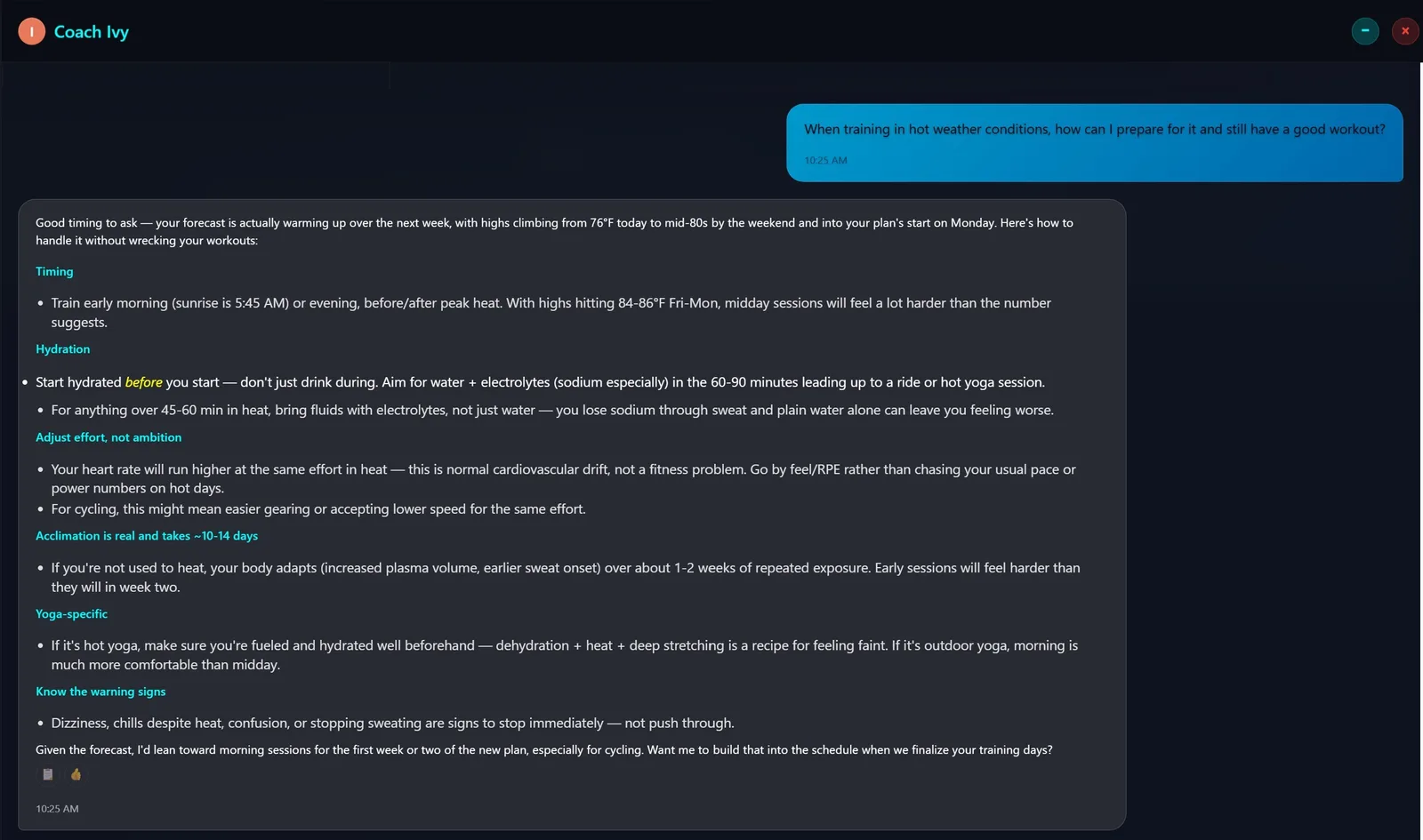
Most of what makes heat dangerous is invisible until it's already a problem: a creeping HRV drop, a resting heart rate that's quietly elevated, a hydration deficit building before thirst kicks in. Tracking all of that by hand, on top of everything else in a normal day, isn't realistic. Fit PA's AI coach watches these signals in the background and adjusts around them automatically. If a heatwave is tanking your HRV or your resting heart rate is running hot, your Readiness Score reflects that and your training plan recalibrates instead of pushing you through a session your body isn't ready for. For anyone tracking their cycle, the same system accounts for luteal-phase or perimenopause shifts alongside environmental heat, so "hard effort" gets redefined based on what your body is actually dealing with that day, not a generic plan written for average conditions. It's not just passive tracking, either. Before you head out the door, you can ask the coach directly: what today's heat and humidity mean for your planned workout, whether to adjust pace or cut the session short, or how much sodium and fluid to bring given your sweat rate. And afterward, if something felt off (unusual fatigue, a cramp that didn't ease, a workout that felt harder than it should have) you can troubleshoot it with the coach in the moment instead of guessing or digging through generic articles. The goal isn't to make you tougher through the heat. It's to help you train and move through it smarter.
The Bottom Line
Heatwaves like the ones hitting Europe and now the US aren't going away, and generic advice ("drink water, stay cool") is true but incomplete. The real leverage points are knowing your actual risk level (WBGT, not just the forecast high), respecting how long real acclimatization takes if you're training, dialing in hydration and electrolytes to your own sweat rate instead of a generic number, and watching medications and warning signs if you or someone you love is vulnerable.
Sources referenced:
- World Weather Attribution, "Fossil fuel emissions have rapidly worsened European heatwaves in just a few decades" (2026)
- TIME, "What to Know About Europe's Deadly Heatwave" (June 2026)
- NPR, ABC News, AccuWeather, and the National Weather Service, US heat dome coverage (June-July 2026)
- CDC, Heat and Health guidance, including "Heat and Older Adults" and "About Heat and Your Health"
- World Health Organization, "Heat and health" fact sheet
- Harvard Health Publishing, "Extreme heat endangers older adults"
- UpToDate, "Exertional heat illness in adolescents and adults: Management and prevention"
- Korey Stringer Institute, University of Connecticut, "Heat Acclimatization"
- National Athletic Trainers' Association (NATA), "Exertional Heat Illnesses" position statement
- Gatorade Sports Science Institute, "Heat Acclimatization To Improve Athletic Performance In Warm-Hot Environments"
- Journal of Applied Physiology, "Heat acclimation improves exercise performance" and "Explaining variation in sweat sodium concentration"
- "Interindividual variability in sweat electrolyte concentration in marathoners," Journal of the International Society of Sports Nutrition
- "Effects of Sodium Intake on Health and Performance in Endurance and Ultra-Endurance Sports," PMC
- "The Effects of Pre-Exercise Ice-Slurry Ingestion on Thermoregulation and Exercise Performance of Highly Trained Athletes: A Scoping Review," International Journal of Exercise Science