
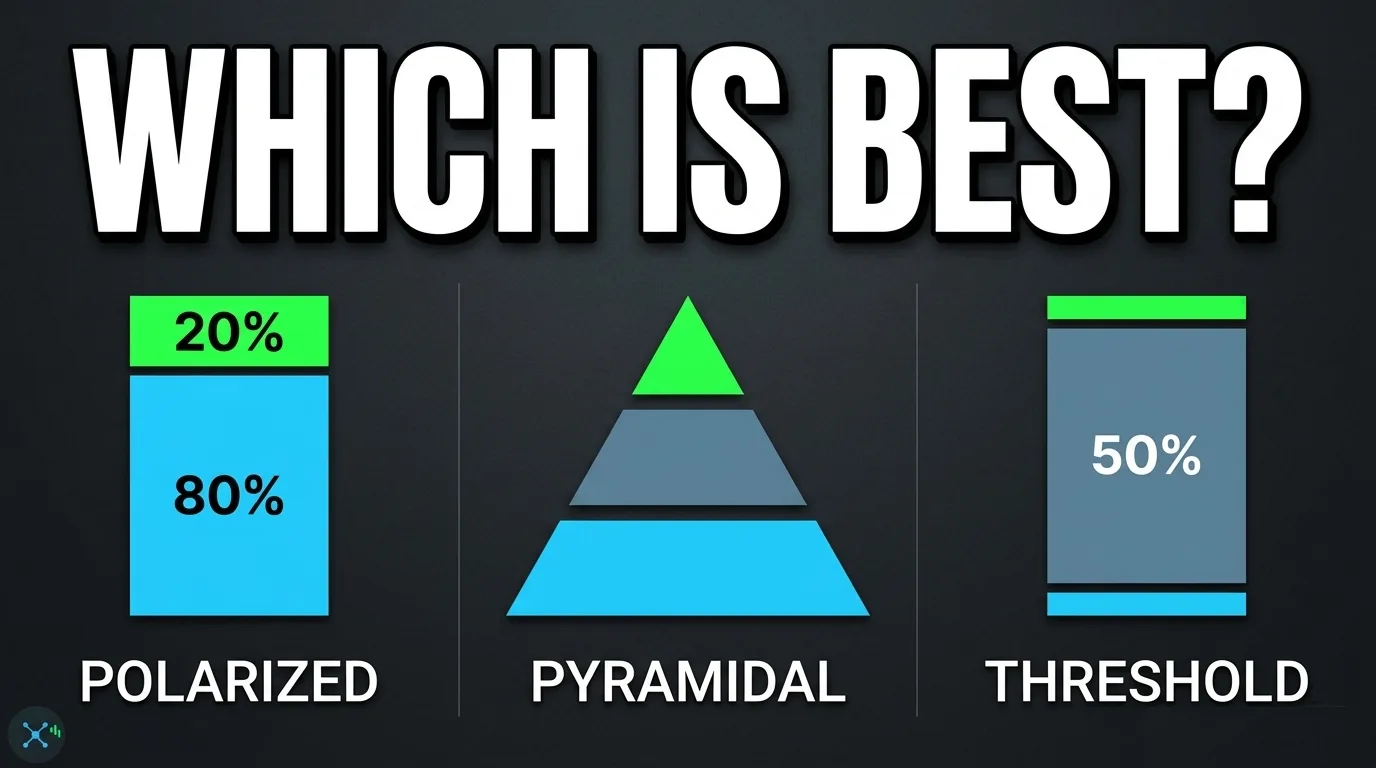
Why Your Current Training Approach Might Be Holding You Back
Most athletes fall into the trap of "linear intensity" — the belief that if you aren't pushing hard every day, you aren't training. But the human body doesn't adapt linearly. As we explore on the Fit PA: The Train Smarter Podcast, true physiological adaptation requires a cyclical approach that respects your recovery metrics.
If you're training for ultra-distances like the Cocodona 250 or Mammoth 200, the "more is better" mentality is your greatest enemy.
The Three Pillars of the Fit PA Model
To build long-term capacity, we categorize training into three core buckets. Rotating these ensures you are building a robust aerobic engine while protecting your structural integrity.
- The Metabolic Base (The Foundation): Low-intensity, high-volume work focused on building mitochondrial density. This is where your fat-burning efficiency is forged. Without a solid base, you cannot sustain effort over 100+ miles.
- Functional Strength (The Armor): Compound movements, mobility, and stability work designed to protect your joints and tendons. For athletes in their 40s and 50s, this is non-negotiable. It isn't just about raw power — it's about structural durability.
- High-Threshold Power (The Edge): Short-duration, high-intensity intervals that sharpen your top-end capacity. This model is used sparingly to prevent central nervous system fatigue while keeping your speed accessible.
The Data-Driven Advantage
The secret isn't just doing these models — it's timing them correctly. You cannot force a High-Threshold Power day when your system is in a state of high inflammation.
Reading Your Performance Management Chart
The Performance Management Chart (PMC) might look complex at first, but it is the most powerful tool in your kit for avoiding burnout and peaking at the right time.
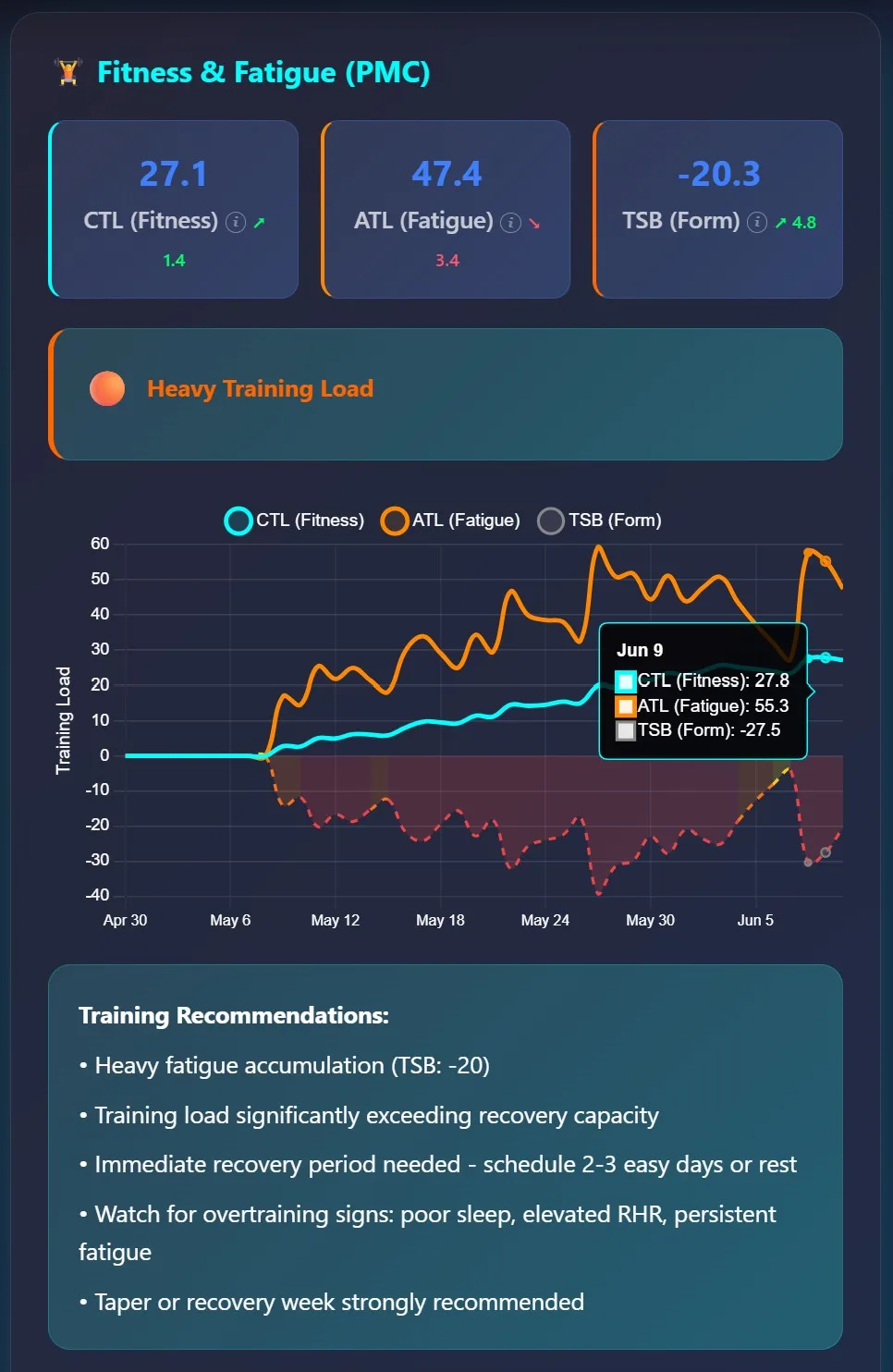
Decoding the Three Core Metrics
- CTL (Chronic Training Load — Fitness): Your long-term engine. A weighted average of your training load over the last 42 days. You want this to trend slowly upward over time as you build capacity.
- ATL (Acute Training Load — Fatigue): Your short-term stress. It measures the load from the last 7 days. If ATL spikes significantly above your CTL, your body is accumulating fatigue faster than it can process it.
- TSB (Training Stress Balance — Form): Your freshness score, calculated as Fitness minus Fatigue (CTL minus ATL). A negative TSB means you are in a heavy training block and accumulating adaptation stimulus. A positive TSB means you are fresh and ready to perform.
Tracking these in the Fit PA app removes the guesswork. When your TSB drops too low, the app automatically flags the need for a recovery week or active recovery days — stopping overtraining before it starts.
The Train Smarter Takeaway
Don't wait for your body to demand rest. Use the Readiness Score in the Fit PA app to determine which training model your body is prepared to handle today. If the data is in the red, prioritize active recovery. Your next personal best starts with today's recovery.
Ready to Train Smarter?
Stop training by guesswork and start training by data. Download the Fit PA app and align your daily workouts with your body's actual physiological needs.