A Halloween party with 100 miles attached
Every year on the last weekend of October, well over a thousand runners and their crews converge on a stretch of Sonoran Desert north of Fountain Hills, Arizona, to run in circles. Many of them are dressed as something else entirely. Javelina Jundred, the original costumed 100-mile trail run, is part endurance test and part Halloween festival, and its organizers lean into both. They call the weekend "Jalloween."
This year the 100-mile race starts at 6 a.m. on Saturday, Oct. 31, at McDowell Mountain Regional Park. The 100K follows an hour later, and a 31K night race rounds out the weekend. Runners in the 100 miler have 30 hours to finish, and the top two men and top two women earn automatic entry to the Western States 100.
But the forecast adds a twist: a day and night of rain before the start, a mostly dry race day, then a second round of heavy rain beginning Saturday night, with a flood watch starting at 11 p.m., in the middle of the race. Before we get to the weather, it helps to understand what makes this event so unusual, and why it deserves more respect than its party reputation suggests.
How a goof-off race became the main event
Javelina Jundred began in 2002 as an act of fun. Its founder, Phoenix ultrarunner Geri Kilgariff, wanted a race people would enjoy, and the name started as a joke on "hundred." The first year drew 180 runners. Early editions looked different from today's: runners covered about six and a half laps of the 15.4-mile Pemberton Trail, reversing direction on each lap. By 2008, Aravaipa Running, led by Jamil Coury, was putting on the race.
Growth since then has been steady. In 2011 the race had 339 starters and was already the third-largest 100-miler in the country. By 2014 it drew about 700 runners and kept a waitlist. In 2025, 1,650 runners started across three distances: 950 in the 100 mile, 450 in the 100K and 250 in the 31K. Entry caps for 2026 are 1,000, 500 and 325.
Two additions changed its character. The Jackass Night Trail, a 31K night race added in 2018, gave more people an easy way into the party. And the Golden Ticket, which sends the top finishers to Western States, brought elite fields to a course where a large share of the field is in costume. It is one of the few places where a record contender and a costumed first-timer share the same loop.
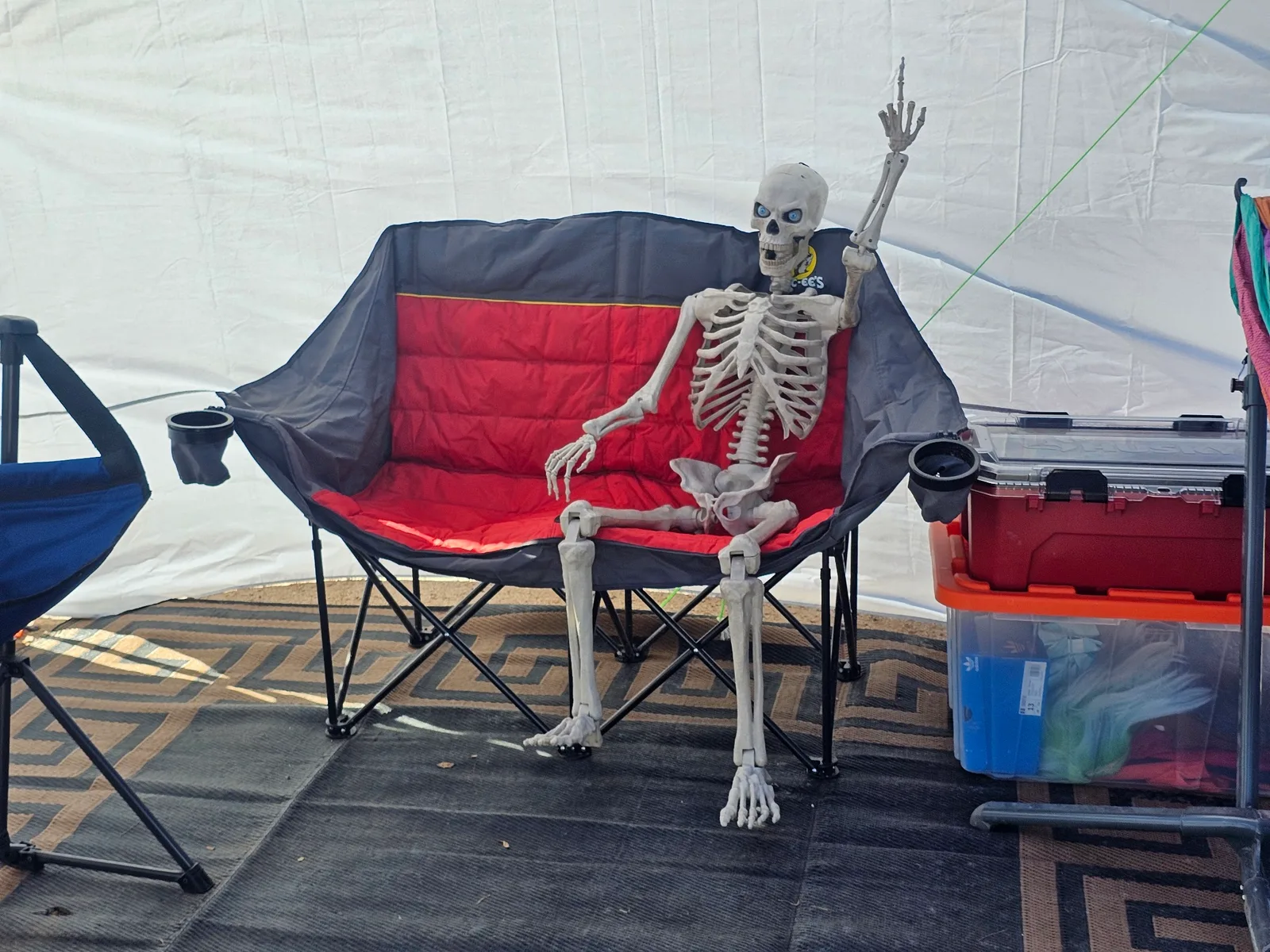
The culture is part of the draw. Organizers warn that the weekend is R-rated. The Jackass Junction aid station is known for music and decorations, crews dress up their canopies, and Outside magazine once compared the whole scene to Burning Man for trail running. It is also a cupless event, so everyone brings their own bottle.
The course that looks flat, and is not
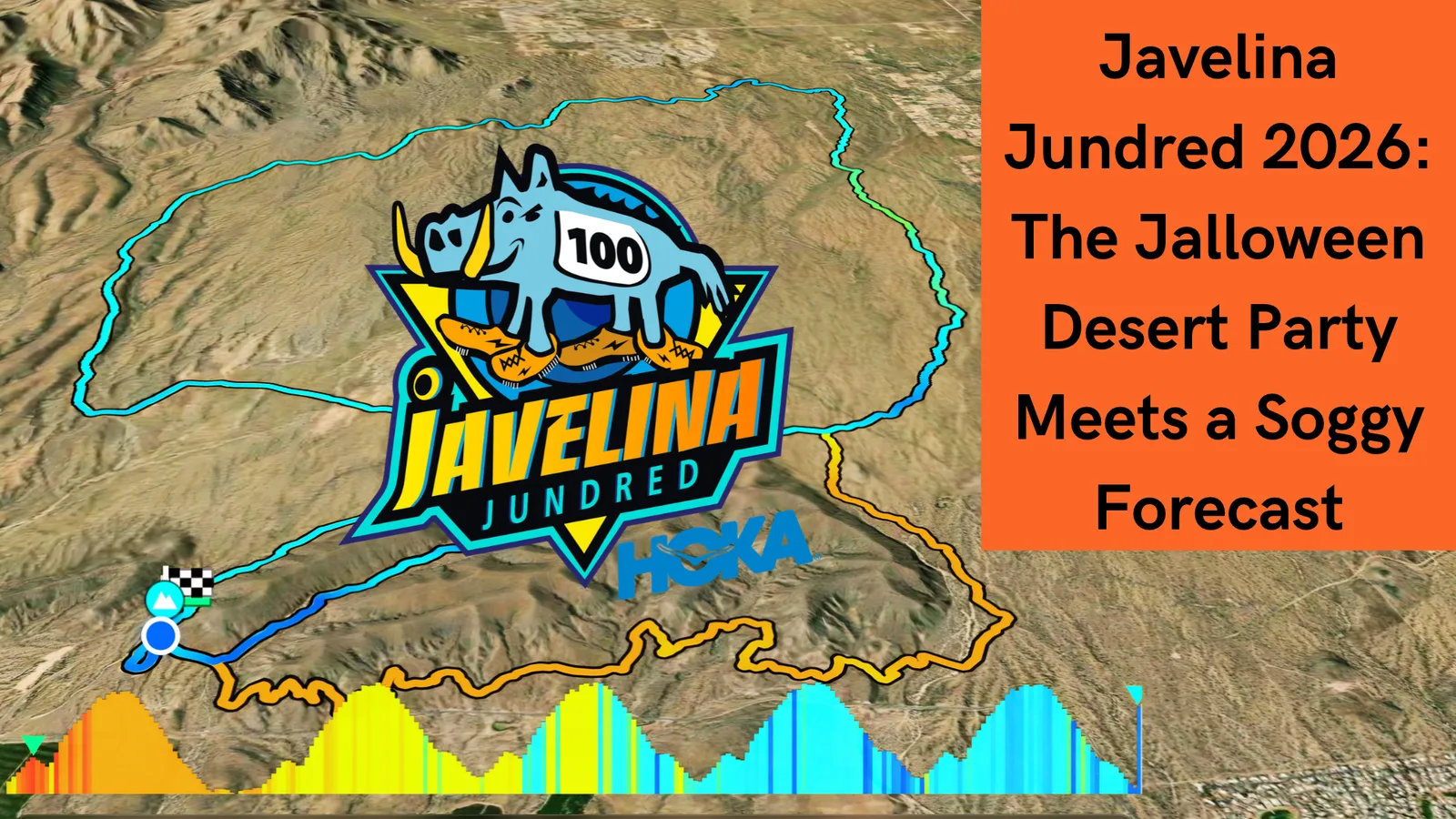
On paper, the numbers look friendly. The course is mostly smooth desert singletrack on the Pemberton, Shallmo and Cinch trails, with no big mountain climbs. The 100 mile is five loops from the start/finish area known as "Javelina Jeadquarters." The first loop runs 22.3 miles and adds a stretch of the Escondido Trail. The next four loops run 19.45 miles each. The 100K covers the first three. Loops run in one direction, and four aid stations break up each lap: Jeadquarters, Coyote Camp, Jackass Junction and Rattlesnake Ranch, with the longest gap about six and a half miles.
Elevation is where the "flat" label falls apart. The organizer's current course page lists about 6,296 feet of climbing over 100 miles, between a low point of 1,623 feet and a high of 2,486 feet. That averages out to roughly 1,260 feet per loop. Earlier course descriptions and many race reports cite closer to 1,580 feet per loop, or about 7,900 feet in total. Either way, every lap starts with a long, gentle climb toward the McDowell foothills before dropping back toward headquarters, and those gentle grades add up over five laps.
The footing has its own character. The trail is a mix of hard-packed granite, loose rock and sandy washes, and runners often single out the rocky section between Coyote Camp and Jackass Junction as the toughest stretch. Shade is nearly nonexistent.
The real trap is how runnable it all feels. Easy terrain invites an early pace the desert will not forgive, and race reports return to the same theme: a fast, runnable course combined with heat is what ends most races. In many years, at least half of the starters do not finish.
Thirty degrees in a day: heat, cool nights and the finish rate
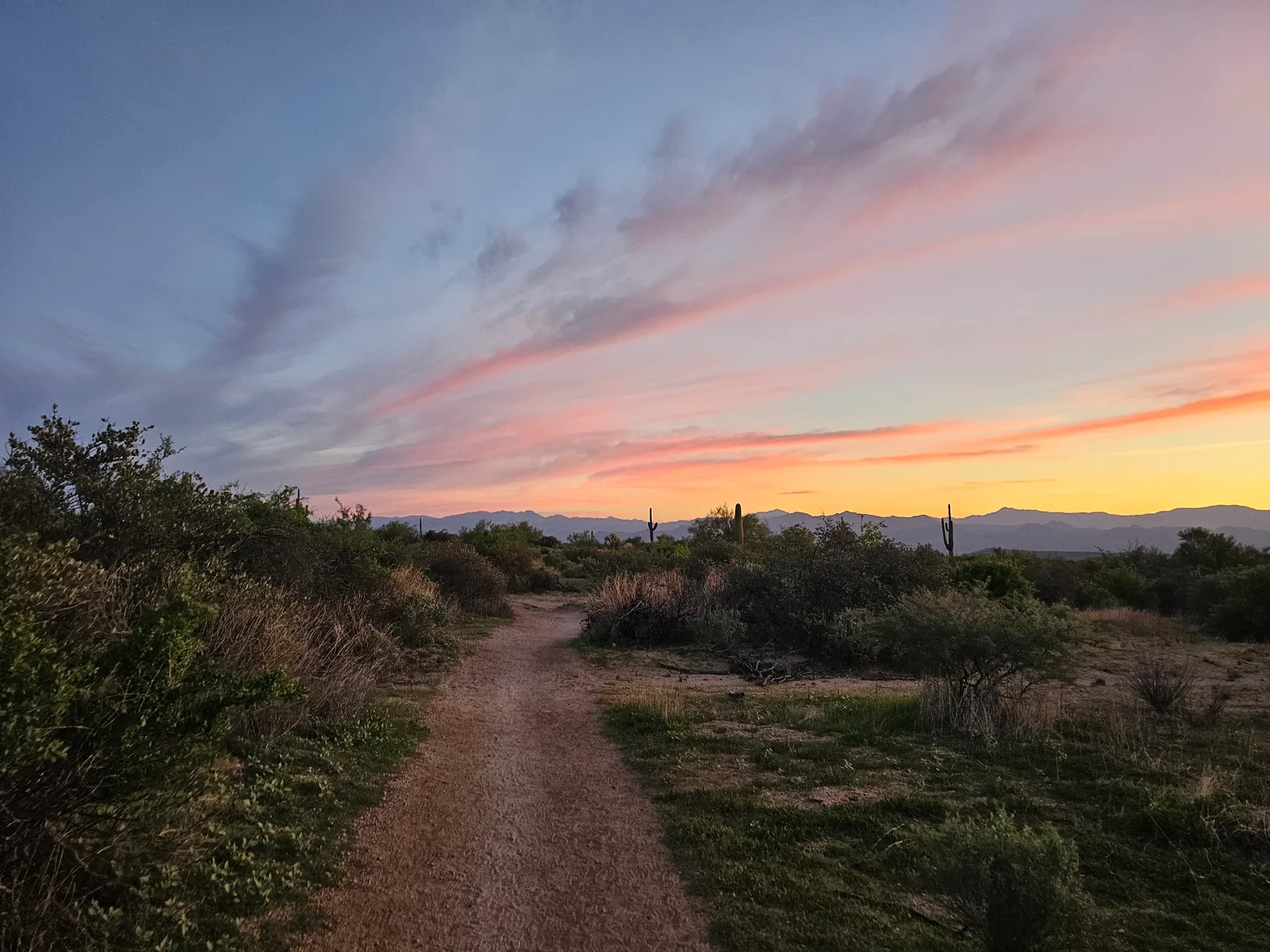
Weather is the other half of the story. The organizer's guide puts average race-week highs near 82°F and lows near 58°F, but it also warns that the race has seen daytime temperatures in the mid-90s and nighttime lows in the high 30s. After the sun drops behind the McDowell Mountains, the temperature can fall from about 80°F to 50°F quickly. UltraSignup's analysis of the 2022 race described a typical swing of about 30 degrees.
That swing shapes everything. The hottest stretch usually falls in the afternoon, around the third loop, and hot years leave a mark on the results. In 2016, with a high of 95°F and no cloud cover, only 52% of the 574 starters finished the 100 mile. In 2024, forecasts called for highs near 99°F in what coverage described as record heat, and David Roche still won in 12:45:04. He credited months of heat training, which helps the body expand plasma volume and start sweating at a lower temperature.
Not every year is hot. In 2011 the race moved to mid-November, and cooler days with a few late-night showers helped produce a course record. In 2022, 401 of 622 starters finished the 100 miles, a 64.5% finish rate, in a field that included podium finishers from both Western States and Hardrock.
Night brings its own contrast. After sunset the temperature drops quickly, but for most runners the cool is a relief rather than a threat: lows in the 60s are widely described as comfortable, and some runners save their best miles for the dark. The organizer still advises a long-sleeve layer for the occasional colder night, since the course has seen lows in the high 30s. Even so, it is heat, not cold, that is the main reason runners drop.
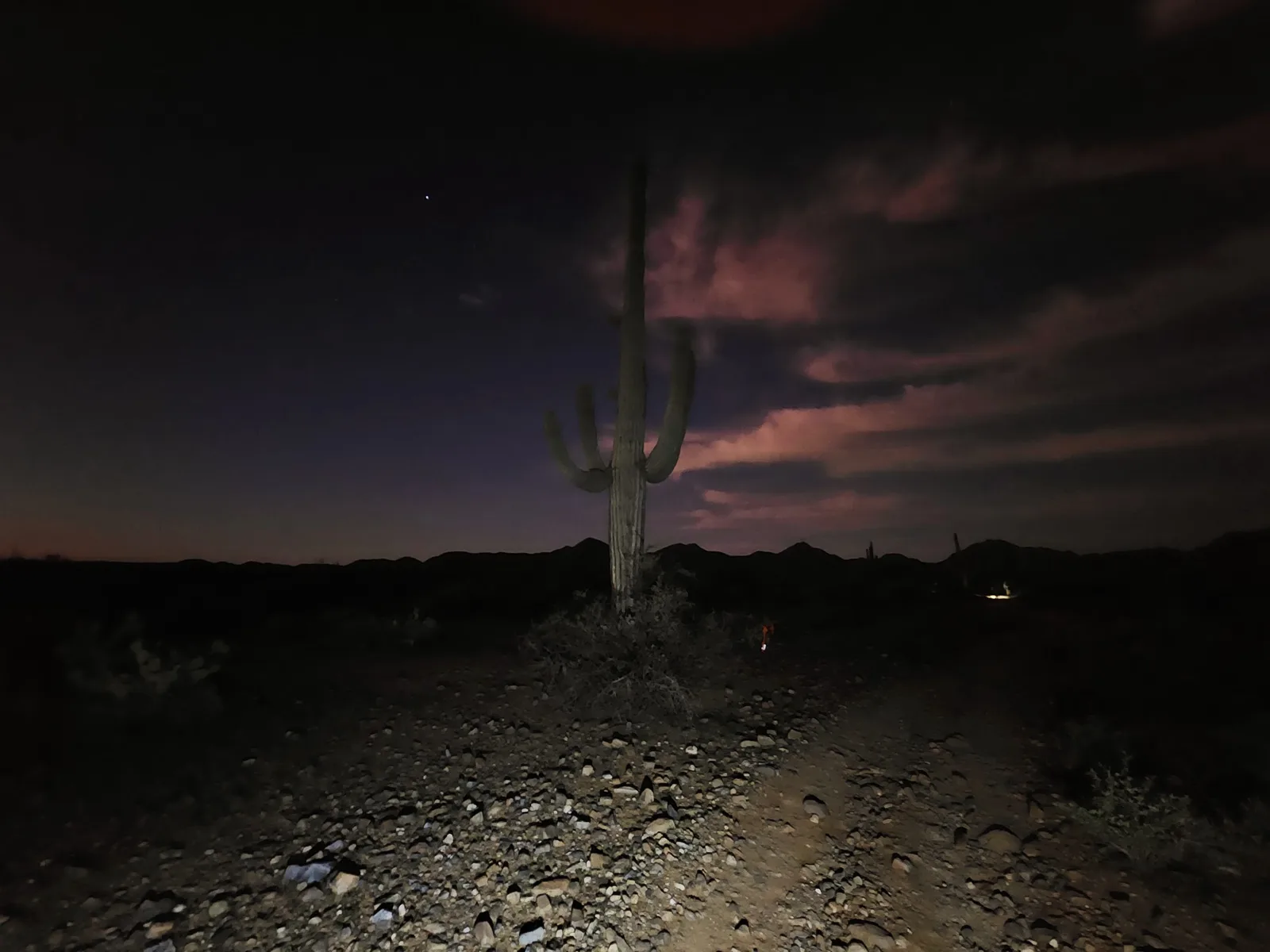
The records that keep falling
If the conditions are demanding, the results are astonishing. Both 100-mile course records have dropped by more than an hour in the race's recent history: the men's from 13:47:43 in 2011 to 12:10:12 in 2025, and the women's from 14:52:06 in 2015 to 13:31:47 in 2025.
The men's race
Hal Koerner set the standard in 2011 at 13:47:43. Patrick Reagan, in his 100-mile debut in 2017, ran about 13:01, cutting 29 minutes from Zach Bitter's 2016 record. Dakota Jones lowered it to 12:58:02 in 2022, and Jonathan Rea ran 12:43:10 in 2023. In 2024, David Roche won in 12:45:04, within about two minutes of the record, in roughly 99°F heat.
Then came 2025. Will Murray won in 12:10:12, about 33 minutes under Rea's record, with Roche second in 12:18:06 and Canyon Woodward third in 12:19:58. All three men on the podium finished under the old mark.
| Year | Runner | Time |
|---|---|---|
| 2025 | Will Murray | 12:10:12 |
| 2023 | Jonathan Rea | 12:43:10 |
| 2022 | Dakota Jones | 12:58:02 |
| 2017 | Patrick Reagan | About 13:01 |
| 2011 | Hal Koerner | 13:47:43 |
The women's race
Devon Yanko ran 14:52:06 in 2015, and Camille Herron lowered the record to 14:03:23 in 2021. Yanko won again in 2022 in 14:36:10, and in 2024 Riley Brady won in 14:19, at that point the second-fastest time in race history.
In 2025, Tara Dower broke the record by more than half an hour, winning in 13:31:47, finishing seventh overall at roughly an 8:07 pace. Beth McKenzie was second in 14:31:14 and Addie Bracy third in 14:45:02.
| Year | Runner | Time |
|---|---|---|
| 2025 | Tara Dower | 13:31:47 |
| 2021 | Camille Herron | 14:03:23 |
| 2015 | Devon Yanko | 14:52:06 |
The 100K
The organizer lists the 100K records as 7:15:53 for Rajpaul Pannu and 8:13:07 for Anna Kacius, both set in 2023.
Shoes, training science, deeper fields and Golden Ticket stakes are the usual explanations for the speed, but no source isolates which matters most, so the safer claim is simply that the course keeps getting faster.
Who to watch on Saturday
The 100 mile is a Western States Golden Ticket race, so the top two men and top two women earn automatic entry to the 2027 Western States 100. If a top finisher already has a spot, the ticket slides down the order, as far as fifth place. That prize shapes the front of the field.
One caution before the names. UltraSignup's public entrant list is not an elite roster. Neither defending champion, Will Murray (12:10:12) or Tara Dower (13:31:47), appears on it as of Oct. 29, and neither do Roche, Woodward, McKenzie or Puretz from last year's podium. Elite invitations are often handled separately, so confirm the start list with Aravaipa before race day. The contenders below come from that list and from a 2026 elite-field listing on Crewed, a trail running fan site, so they are entered runners rather than official seeds.
The men
- Cole Watson (Rancho Cordova, California). Placed 15th at Western States in 2024.
- Blake Slattengren (Issaquah, Washington). Finished second here in his 100-mile debut in 2023, about five seconds off the record at the time.
- Rajpaul Pannu (Denver, Colorado). Holds the 100K course record of 7:15:53 from 2023 and ran 11:58:01 to win the 2024 Jackpot Ultra 100 miler on a paved loop.
- Jacob Banta (Mill Valley, California). One of the field's most experienced highly ranked entrants, with 33 prior results on UltraSignup.
- DJ Fox (Durango, Colorado), Canhua Luo (Lijiang, China) and Jordan Bramblett (Paulden, Arizona). All three are listed in the event's elite field and rank among the top entrants.
- Jordan Maddocks (Bluffdale, Utah). Listed as the top men's 100K finisher in 2025, in 8:29:40.
- Also entered: Andy Jones-Wilkins, John Raneri, Joe Buckles, Brendan Shearn, Zach Eagle, Justin Kelsey, Cole Smith and Rob King.
The women
- Camille Herron. Won here in 2021 in 14:03:23, a course record at the time, and broke her own women's 100-mile world record in 2022.
- Heather Jackson (Bend, Oregon). A six-time Ironman champion who won this race in 2023, in 14:24:47, a year after a fifth-place debut here.
- Desiree Linden (Washington, Michigan). The 2018 Boston Marathon champion, bringing marathon speed to the desert loops.
- Devon Yanko (Howard, Colorado). A two-time champion, in 2015 and 2022, and a former course record holder.
- Addie Bracy (Buena Vista, Colorado). Third last year in 14:45:02, earning a Golden Ticket.
- Anna McKenna (Noosa Heads, Australia) and YiOu Wang (San Anselmo, California). Both are listed in the event's elite field and rank among the top entrants.
- Lucie Rathbun (Grand Junction, Colorado) and Katie Asmuth (Mammoth Lakes, California). Rathbun was fifth here last year in 15:02:44, and Asmuth won the 2025 100K.
- Also entered: Ellaney Matarese, Imogen Ainsworth, Lauren Jones, Starshine Blackford, Pam Reed, Shae Regan, Sarah Billingsley, Adrienne Kemp, Molly Schmelzle, Sherry Foco, Allison Lee and Sylvie Abel.
Whatever the weather does to the clock, the race for the Golden Tickets should be a good one.
This year, the desert gets wet
Which brings us to this weekend. According to the National Weather Service forecast issued at 4:06 a.m. on Friday, Oct. 30, the rain falls before the start and after the midpoint, with a mostly dry window in between. Forecasts will keep shifting, so treat the pattern as firmer than any single number.
| When | National Weather Service forecast |
|---|---|
| Friday, Oct. 30 | Showers and thunderstorms, 100% chance, a half to three quarters of an inch, high near 75°F. A flood watch runs until 6 p.m. |
| Friday night | Showers and thunderstorms likely before midnight, 60% chance, a tenth to a quarter inch, low near 61°F |
| Saturday, Oct. 31 (race day) | Mostly cloudy and dry, high near 76°F, light wind |
| Saturday night | Showers likely before 11 p.m., then showers and possibly a thunderstorm until 2 a.m., 90% chance, three quarters of an inch to an inch, low near 62°F. A second flood watch begins at 11 p.m. and runs until 5 a.m. Monday |
| Sunday, Nov. 1 | Showers, 100% chance, 1 to 2 inches possible, high near 69°F, gusts up to 20 mph |
| Sunday night | Showers and possibly a thunderstorm, 80% chance, a quarter to half an inch |
The 100 mile starts at 6 a.m. on trail soaked by a full day and night of rain. Saturday itself looks dry and mostly cloudy, which is mild for this course, but the water does not leave the ground that fast. Then the heaviest rain arrives Saturday night, with most of the 100-mile field still out on the loops.
Mud is the story. With rain all day Friday and again Friday night, the course will be muddy from the first mile, and the sandy washes and low spots will hold the most water. Rain has muddied this course before: in 2011 it arrived early Sunday and left the trail cold, wet and muddy in places into the early hours. This time the ground starts wet, gets worked over by hundreds of shoes through the day, and is soaked again by Saturday night's rain. Expect slower loops, especially after dark.
For a race whose main enemy is heat, rain changes the equation rather than removing it. Saturday's cloud cover and mid-70s high lower the risk of heat illness, though humid air still limits how well sweat evaporates. In exchange, runners take on new problems: wet shoes and sand in the washes raise blister and chafing risk, granite can turn slick, and wash crossings can change quickly. Lightning and wind are a concern on an exposed loop when the storms arrive, and race staff may need to hold or adjust the course.
With a 30-hour limit, the second flood watch covers the night loops and the Sunday-morning finish window. Course decisions belong to Aravaipa, and no published weather plan for 2026 turned up, so runners and crews should watch the race's official channels through Saturday.
If you are thinking about running it
Some of what follows comes from the organizer and from race reports. The rest is general ultrarunning practice, so test it in training and talk to a clinician about anything medical.
Pace for the whole day
Start slower than feels right. The first loop is the coolest of the day, which tempts runners to bank time, but the fast early pace is a common reason people fall apart later. One runner's advice is to take the midday stretch, roughly 11 a.m. to 4 p.m., easy and save energy for the cooler night, when, as one runner put it, you can really cruise.
Heat
In hot years, preparation starts weeks ahead. Heat acclimation training helped Roche win in 99°F heat. On race day, ice in a bandana and in arm sleeves, staying wet, and letting aid station volunteers load you up are the tips that show up again and again. Ice is sold at the event store at headquarters. Some runners also carry an ultralight umbrella for portable shade on the exposed loops, which can noticeably cut the sun's heat. Check the race rules first, and keep it clear of other runners on the trail.
Wet and cool
This weekend's forecast makes these the priority items:
- A packable rain shell or wind layer, plus a dry layer for the night. The organizer recommends a long sleeve in a drop bag.
- Two or three sock changes, and shoes with drainage and real tread for slick granite and mud.
- A second pair of shoes in the headquarters drop bag. Mud and sand wear socks out quickly and trigger hot spots.
- Gaiters or a snug sock layer to keep grit out of your shoes.
- Anti-chafe balm on feet and underarms, re-applied at headquarters each loop.
- A waterproof bag for your phone, and double-bagged contents (a zip bag inside a trash bag or dry bag) in every drop bag, with each drop bag inside a waterproof sack so everything stays dry in a downpour.
- A slower pacing plan than your dry-weather one, since mud costs time and energy.
- If lightning arrives, follow race staff instructions rather than waiting it out on an exposed ridge, and put any umbrella away.
Fueling and hydration
Eat early and on a timer, and practice your race-day foods in training. A commonly cited range for long events is about 30 to 60 grams of carbohydrate per hour, up to roughly 90 grams per hour with mixed carbohydrate sources. That is an approximation, and gut tolerance and body size vary a lot. Aid stations carry items such as broth, ramen, wraps, fruit and Gu Roctane, with pizza at headquarters and burgers at Jackass Junction, but do not rely on anything you have not tried.
Drink to thirst and replace sodium according to your own sweat rate. Humid, rainy air still means sweating, and overdrinking plain water carries its own risk. Because the race is cupless, bring your own bottle or cup.
Drop bags and packing
Drop bags are accepted at the start/finish area and at Jackass Junction, so check the 2026 guide for deadlines. One past report cited a 5:45 a.m. cutoff for the remote bag. Pack for changing conditions rather than for every aid station: layers for temperature drops and rain, spare socks, a backup headlamp and batteries, anti-chafe balm, your favorite foods and your electrolytes. Keep critical medication on you or with a specific crew member, and leave valuables like a GPS watch out of the bags. Label each bag and organize the contents in zip bags by category (feet, food, layers, light) so a tired brain can find things quickly.
Crew and pacers
Crew access is only at Javelina Jeadquarters, and each runner may have one pacer with a waiver and pacer bib. Crew canopies are sold out for 2026, so crews without one should plan a rain-proof setup of their own.
Planning your fuel, and the bottom line
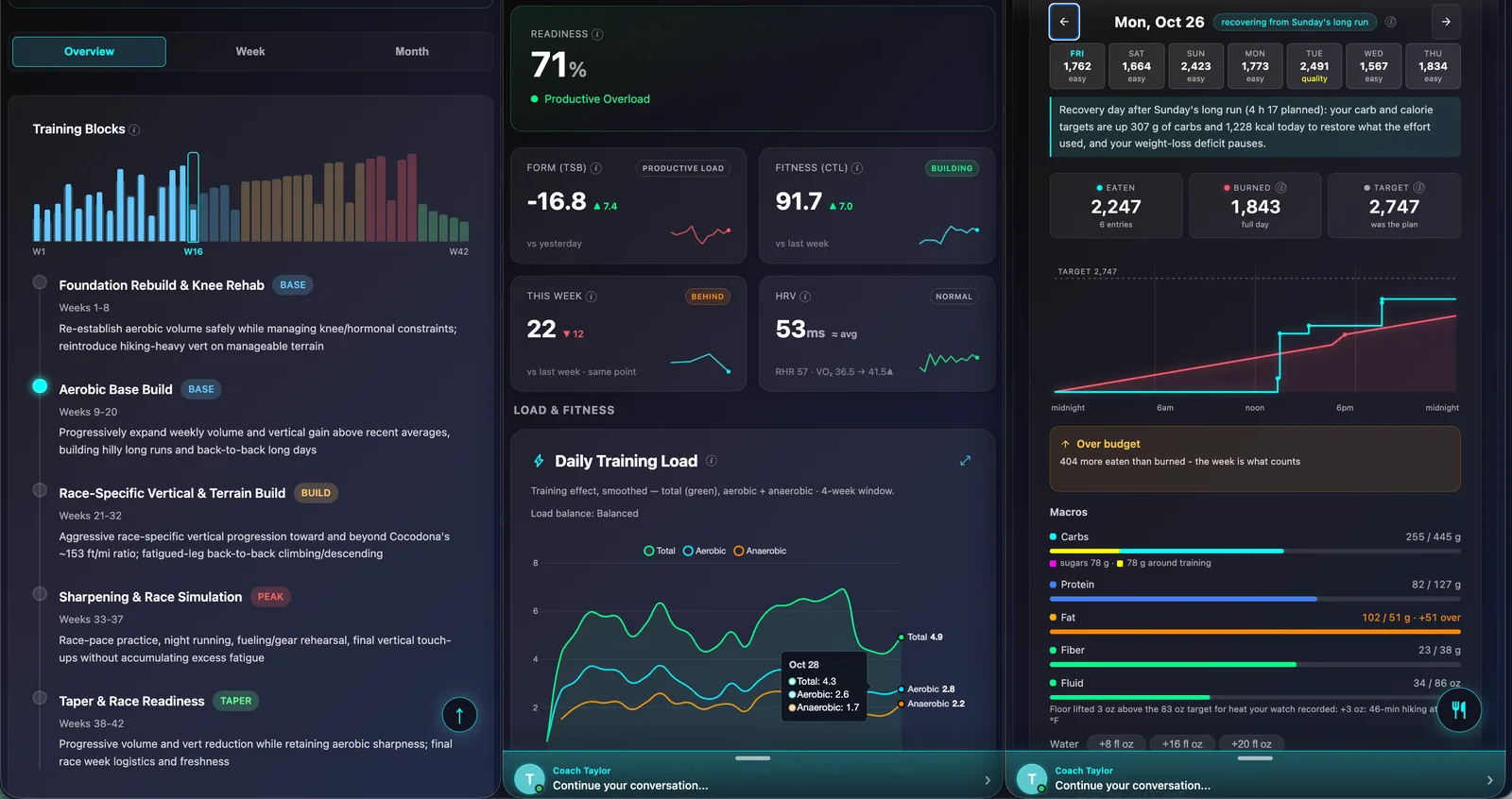
A 100-miler is won or lost on the details no one posts photos of: how you eat the day before, how often you take in carbohydrate, and whether you can tell what worked when your legs are tired. Tools can help with that. Fit PA, for example, marks the day before a long effort as a fuel-up day and raises carb targets, builds a timed fueling plan from foods you actually use, logs what you ate against your target and calories burned, and learns which foods worked for you over time. It is built for any goal, not only ultras, and it cannot change the weather, but it can take some of the guesswork out of a long day.
Whatever the sky does this weekend, Javelina Jundred will deliver what it always does: a loop, a crowd, a lot of costumes and a very long day. The runners who finish will be the ones who started patiently, ate early, kept their feet dry and kept moving. And for everyone watching from the aid stations in a rain poncho, the party goes on.
How Fit PA Can Help Anyone Training for a Race Like Javelina Jundred
Plan built around race day
- Tell the coach the race, the date and your target. Fit PA builds a plan backward from that date.
- The plan is sized to your real availability: hours per week, training days, long-run day and strength sessions.
- If life interrupts (illness, travel, a lost block), the coach re-plans the remaining weeks around your current fitness. Completed weeks stay untouched.
- Planned workouts push to Garmin, Coros, Suunto and Wahoo watches. Polar syncs in only.
Training that adapts to readiness
- Sleep, HRV and resting heart rate feed a daily recovery score. Fitness, fatigue and form trends sit alongside it.
- The coach can gate hard days on those signals, so quality work happens when you're ready for it.
- Zone and intensity balance are tracked, so you can see whether easy days are staying easy.
Fueling treated as training
- Every planned endurance session of an hour or more carries a fueling plan: carbs per hour, fluid per hour, a pre-session meal, and your own products as whole servings on a cadence.
- After a long session, you tell the coach what you took and how it sat. That goes into your fueling record.
- The next session like it leads with what worked for you and flags what failed, with the rate and heat it failed at.
- Weigh in before and after a long or hot session to get your sweat loss and what to drink back.
- Daily calorie, macro and fluid targets are built around your planned training. They rise before key days and race day, and they recover after.
Health and injury awareness
- Injuries, illnesses and medical conditions live in a health file.
- The coach checks in on them at a cadence set by severity and adjusts training around them.
- The coach doesn't diagnose. Medical questions go to your doctor.
Your history and records
- Past activities import from Garmin, Coros, Polar, Suunto, Wahoo, Apple Health and Health Connect. Older seasons can be added by bulk .fit upload.
- Personal records are tracked automatically by distance and sport.
- Plan adherence shows what you did against what was planned. For race plans, it names the key sessions you hit or missed, such as the long run or the quality days.
- Weekly volume, load and longest sessions are summarized in rolling windows.
A coach that remembers
- The coach keeps your decisions, what has worked for you and what hasn't, and uses them in later advice.
- Coaching is available in chat on web and in the iOS and Android apps. On web you can also dictate messages.
- You can attach screenshots, course profiles and GPX routes, and the coach reads them.
- Running-form video analysis is available at /form-analysis. It measures side-on contact patterns and gives specific drills.
Planning tools
- Plans export to Excel and to Google, Apple or Outlook calendars.
- Any activity can be shared as a branded image.
- An exercise library has cue cards for the strength movements in your plan.