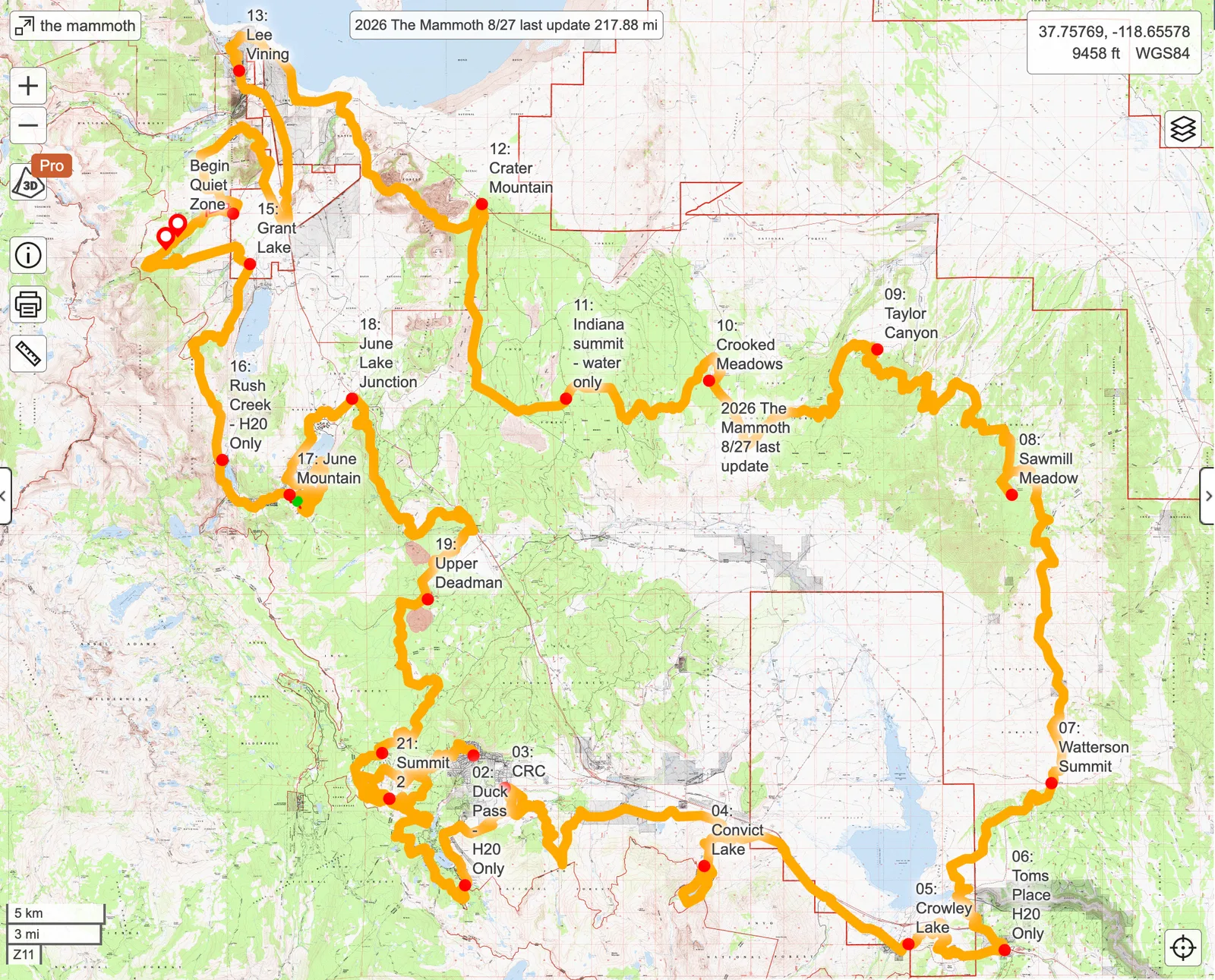
On Friday, October 2, at 9 a.m., runners leave the Village at Mammoth Lakes on a single 218-mile loop through the Eastern Sierra. They have until 10 p.m. Tuesday to get back. The route circles a caldera roughly 760,000 years old, climbs 31,091 feet, and arrives in the middle of fall color season.
The Range of Light
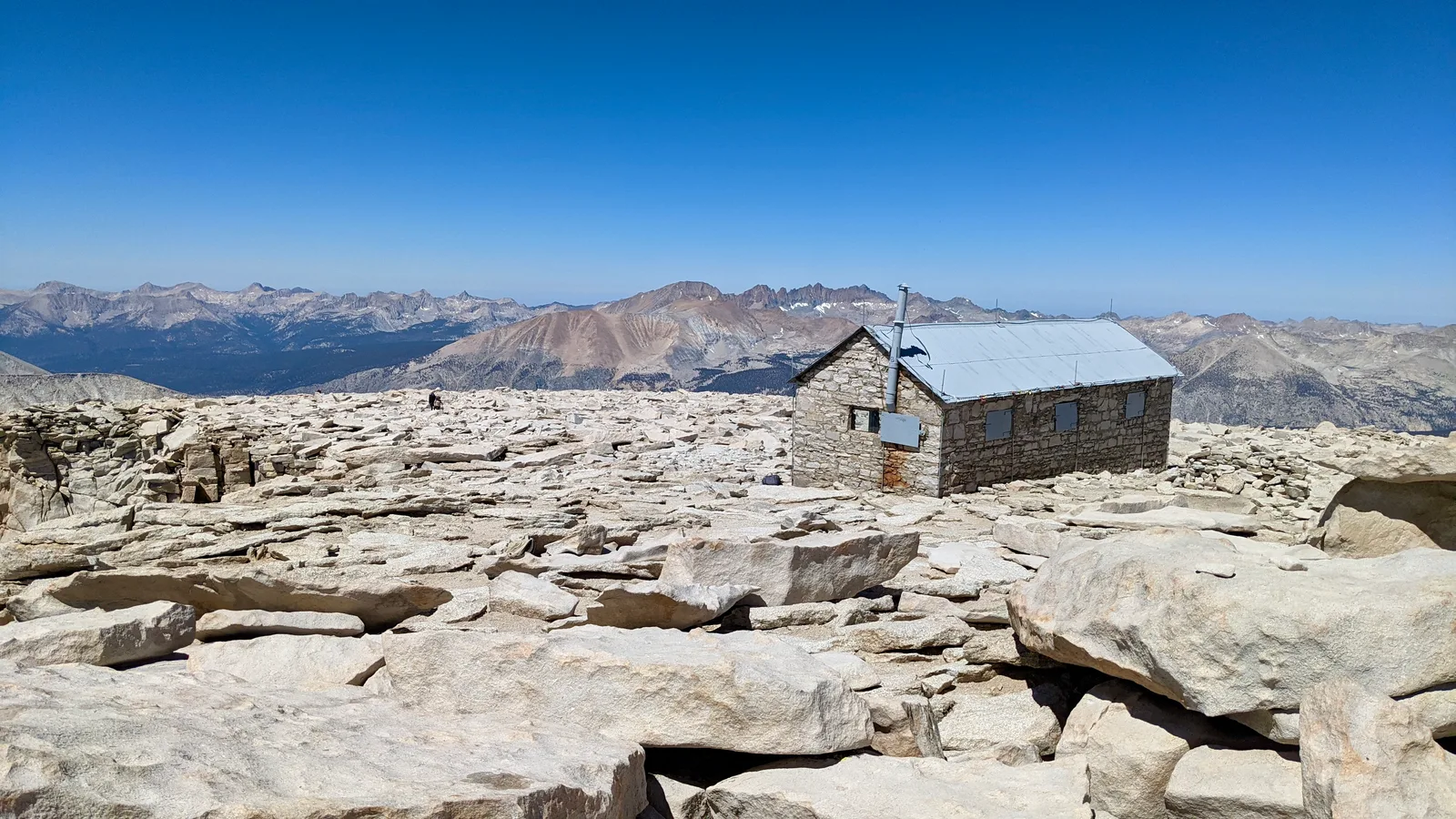
In 1868, John Muir walked into the Sierra Nevada for the first time. Years later he decided the range deserved a name about light rather than snow: the Range of Light. He wrote of morning sunbursts over icy peaks, midday radiance on rock, alpenglow, and waterfalls throwing rainbow spray. The Eastern Sierra earns the name. The range is almost entirely granite, pale and flecked with quartz and mica, and it towers one to two miles above the land around it. It's home to California's fourteeners, including Mount Whitney, the tallest peak in the lower 48 at about 14,505 feet (4,421 meters). The west slope wrings out most of the rain, so the east side is dry and open, with more sky and fewer trees. At twilight the granite turns mauve, and after dark it glows soft blue.
Then comes fall, when the Eastern Sierra puts on its best show. Aspens turn gold and shimmer at the slightest breeze. Willows glow deep orange colors along the creeks, and the hillsides look lit from within against pale granite and a deep blue sky.
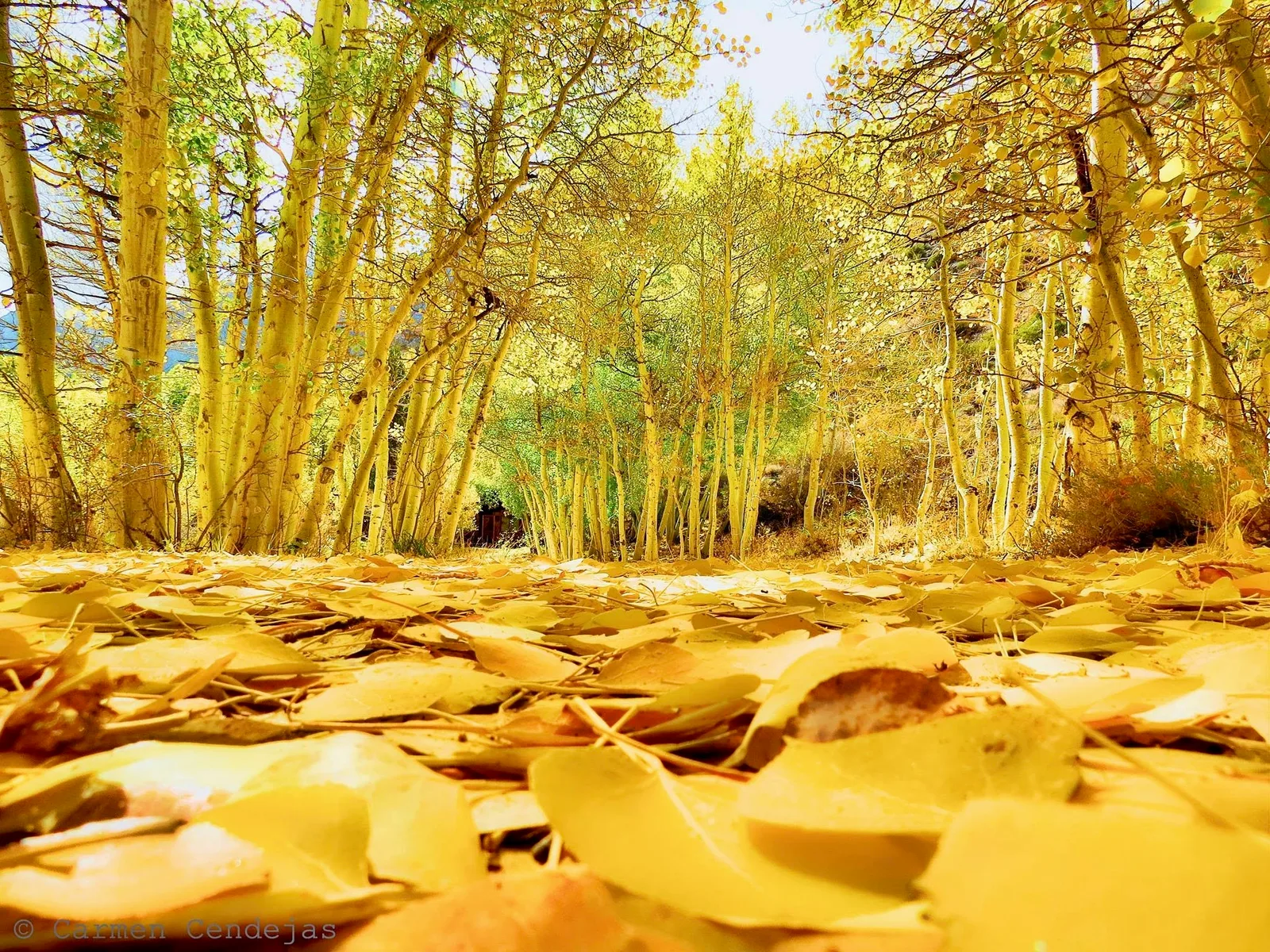
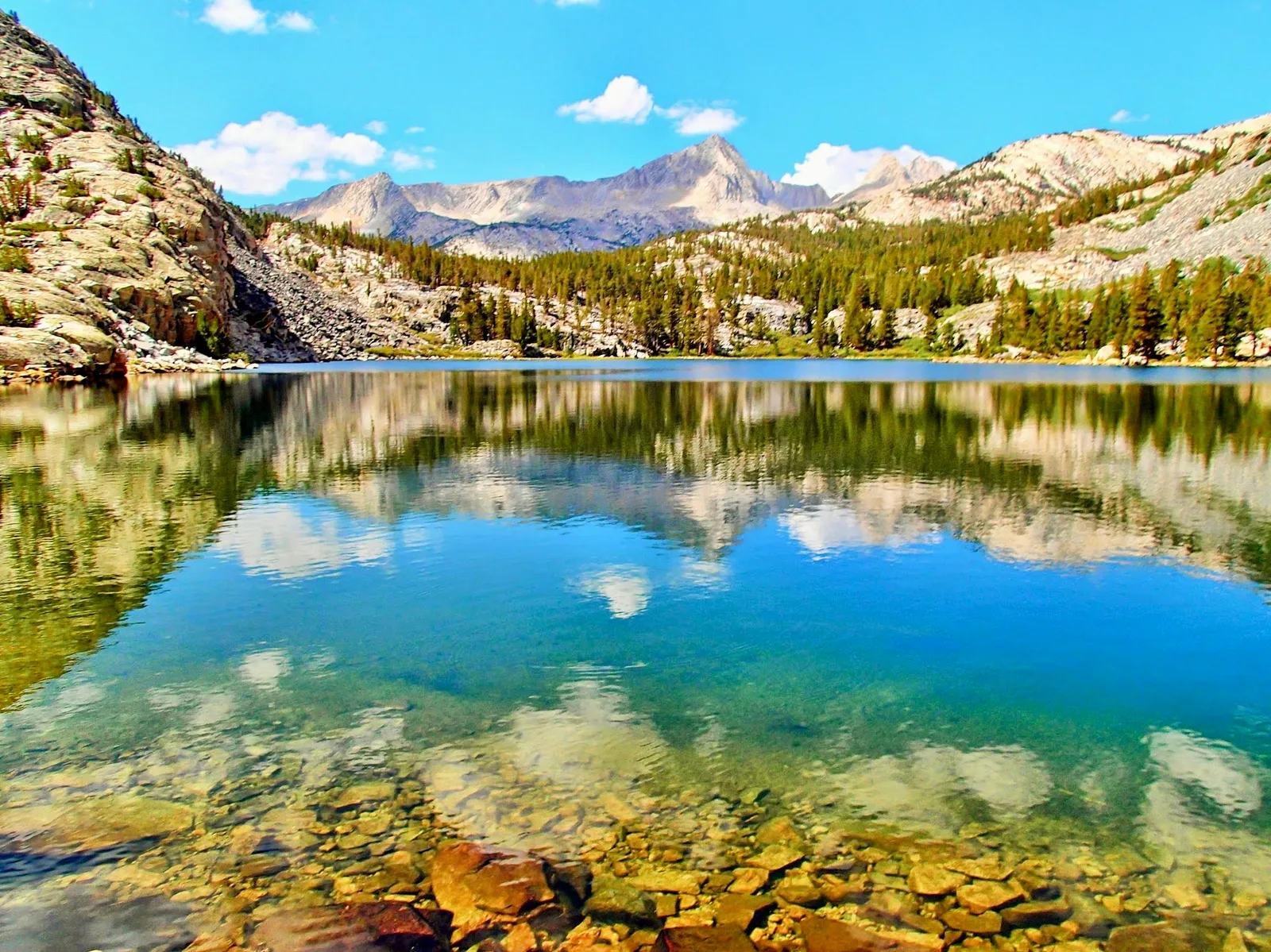
The prettiest stop may be Convict Lake, which the route passes. Aspens blaze along the shore and creek, steep peaks rise behind them, and the still water doubles everything. Whenever runners arrive, the light will be worth a look up.
Fire, Ice, and People
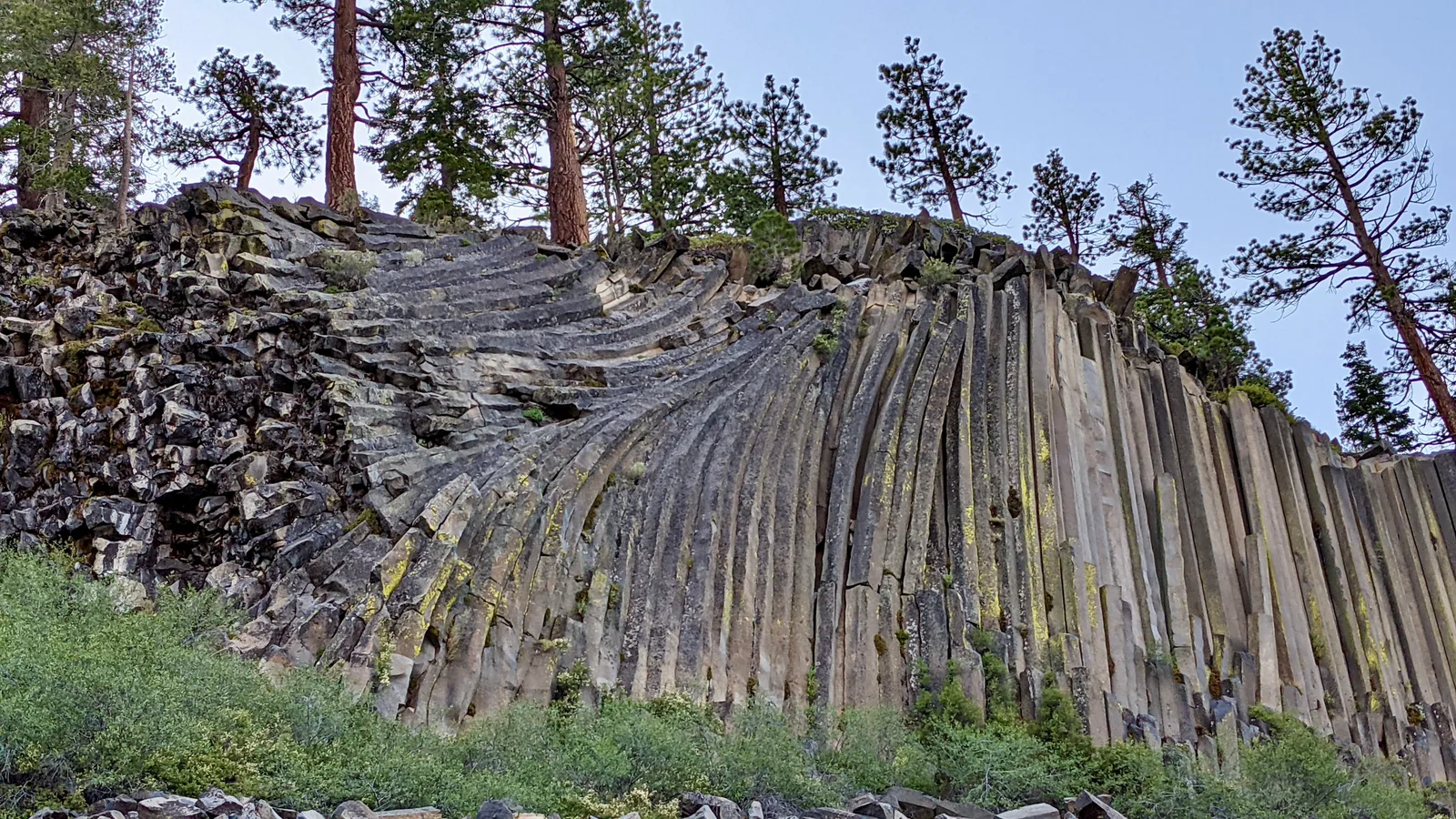
The Sierra's granite formed deep underground, then tilted skyward along its eastern edge, which is why the range drops so steeply toward the desert. Volcanoes came next. The Long Valley Caldera is about 20 miles long and up to 3,000 feet deep, and nearby lava domes erupted as recently as 1350 CE.
The Kootzaduka'a have lived around Mono Lake since time immemorial. They harvested brine fly larvae from the lakeshore, gathered moth larvae from the Jeffrey pine forests, and traded obsidian and other goods across the range. Gold strikes in the 1850s and 1870s brought prospectors, and Mammoth City had 1,500 residents by the end of 1878. It went bust by 1880, and the town later reinvented itself around skiing and recreation. Mono Lake has its own scar and its own beauty. Los Angeles began diverting its streams in 1941, and the falling water exposed the tufa towers visitors photograph today.
The People Who Made It Happen
Great races have people behind them. Tim Tollefson is a professional runner for Craft Sportswear, a three-time USATF Trail National Champion, and a former physical therapist in Mammoth. After nearly a decade running the world's biggest ultras, he wanted to build something like them at home. Mammoth Trailfest became the largest 50K in America within four years, and it gave a tourism town a reason to fill up in the off season.
The Mammoth 200 is the next chapter. Tim and race director Hilary Yang, who brings years of experience in 200-mile events, have built world-class trail running in the Eastern Sierra without losing the community that makes it special. Local businesses, sponsors, and volunteers fill out the team, and the events celebrate everyone from the back of the pack to the front. When storms and snow closed the summit last year, the team charted a new route, and Tim helped lead runners along it to the finish. This is a race built by people who care.
What 218 Miles Does to a Person
The numbers tell part of the story. Runners climb 31,091 feet and descend the same, between 6,424 and 11,053 feet, about 143 feet of climbing for every mile. The ground is soft, with ground-up pumice and pine needles that get into shoes and lungs. Last year's route climbed Mammoth Mountain, crossed the caldera floor past Convict and Crowley lakes, went over Glass Mountain Ridge (11,128 feet, made largely of obsidian), dropped to Mono Lake, passed through June Lake, and climbed Mammoth Mountain again. The 2026 route awaits Forest Service approval, so expect small changes.
The rest is what it does to a person. Over two, three, or four days, runners will hit the highest highs and the lowest lows, and not just once. There's the joy of a ridge at sunrise, and then the crash in the small hours, when the trail is black and cold and every aid station chair looks like a bed. There's the nausea that shows up at mile 90 and disappears at 110, and the moment you decide you're done. An hour later, after soup and a push from a friend, you're moving again. Nobody covers 218 miles on talent alone. They do it one step at a time, then one aid station at a time, on grit and stubbornness.
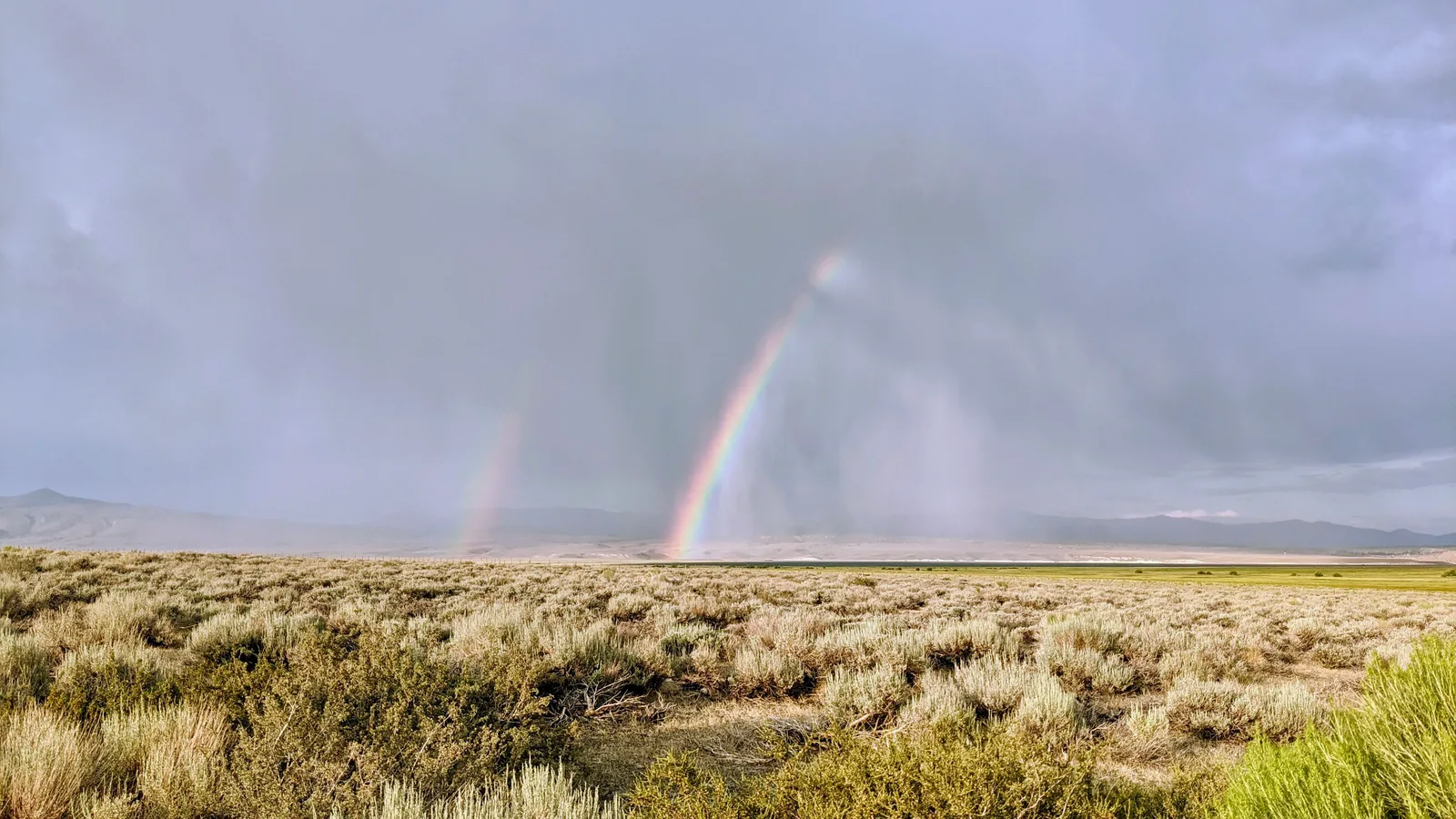
Weather adds its own drama. Last year's inaugural race saw thunderstorms, a tornado on Mono Lake's east shore, and snow and ice on the summit. This year looks calmer. The National Weather Service's forecast, issued September 27, showed sunny days with highs in the low 70s in Mammoth Lakes through Sunday, and lows in the mid 40s. The swings are big, though. On September 27, the summit read 38°F with gusts to 35 mph while the base sat at 50°F. Expect warm afternoons and freezing nights.
Who to Watch
Last year, Jimmy Elam won in 45:16, and Rachel Entrekin was second overall in 46:50:55, the first woman and a course record. Ninety-two runners finished.
This year's entry list has some names to keep an eye on. Among the men, William Kent of Oklahoma is the highest-ranked entrant on UltraSignup, followed by Keith Mackowiak of New York and Cole Crosby of Rhode Island. Jonathan Kuplack, Jake Jackson, and Ethan Herrera are back after finishing last year. Among the women, Jill Dennes of Tennessee and Lindsey Dwyer of California lead the rankings, and Amber Weibel of South Lake Tahoe returns after taking second woman in 2025. Rankings come from past results, and 200-milers reward patience and sleep management as much as speed, so treat this as a watch list, not a forecast. First finishers are expected Sunday, October 4.
Follow Along
You don't have to be in Mammoth to watch. Mountain Outpost, Jamil Coury's livestream crew, is broadcasting the race on YouTube with multi-camera coverage, drone footage, and finish line interviews. Watching an ultra unfold on a livestream is a great way to learn what a 200-miler actually takes.
Training for a Race Like This
A 200-miler isn't a longer hundred. It's altitude, back-to-back long days, night running, and a climb profile that punishes anyone who trained on flat ground. A generic template can't account for that. Fit PA's AI coach is built to.
- It starts with the race. The coach finds out the specific demands of your race, including distance, elevation gain, technicality, and terrain. You can also upload the race GPX and save it as a route.
- Then it builds the right training for you and that race. The coach picks the protocol that fits you and your goal. For an ultra, that means periodized training with progressive phases that build volume and elevation, plus the strength work you need and race rehearsal, so nothing on race day is a first.
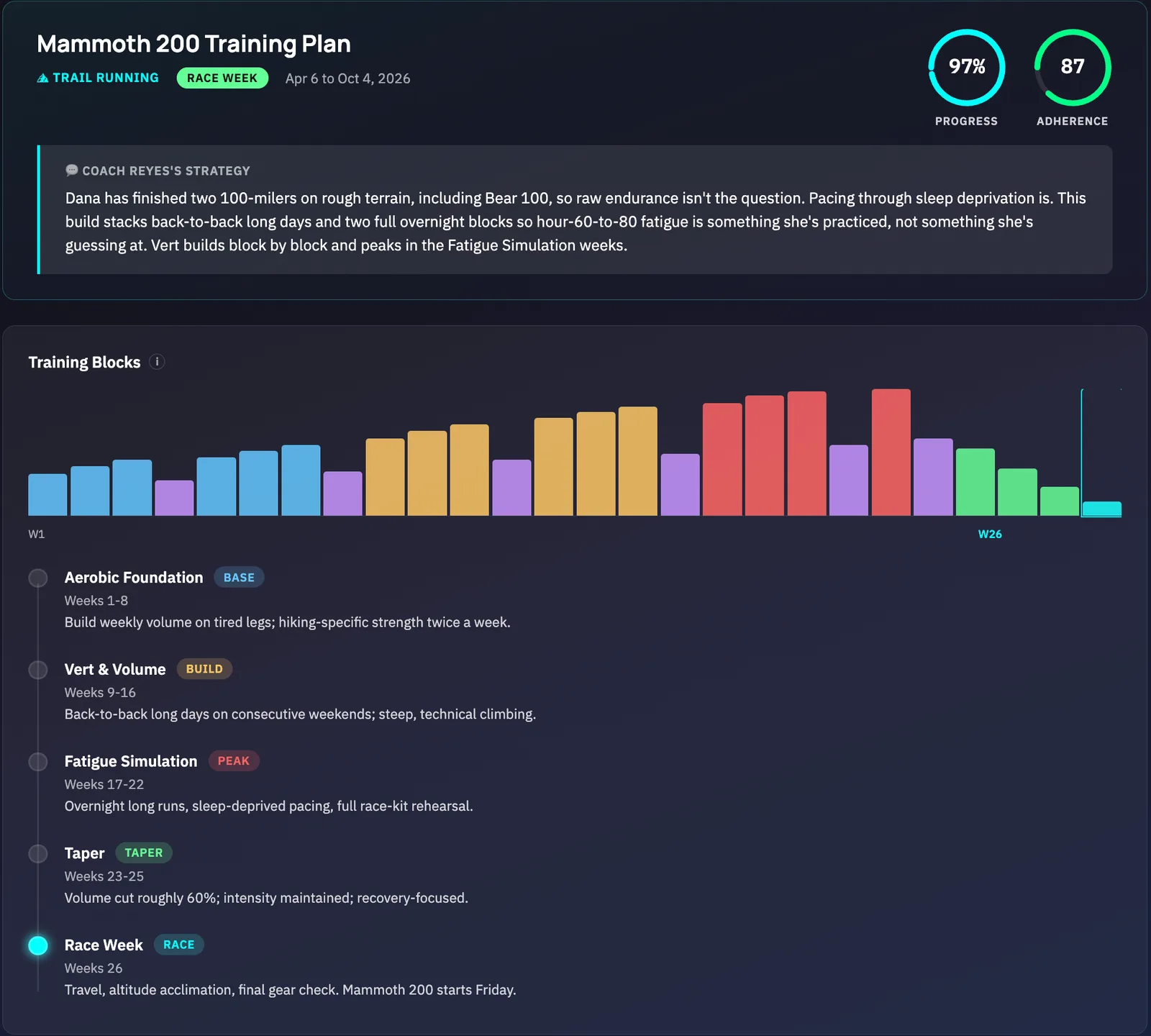
- Your plan adapts. The coach reads your biometrics and completed activities and adjusts as you go. Every workout is sent to your device or your calendar. Fit PA integrates with Garmin, Coros, Suunto, Polar, Apple Watch, and Health Connect, so your completed activities flow back in automatically.
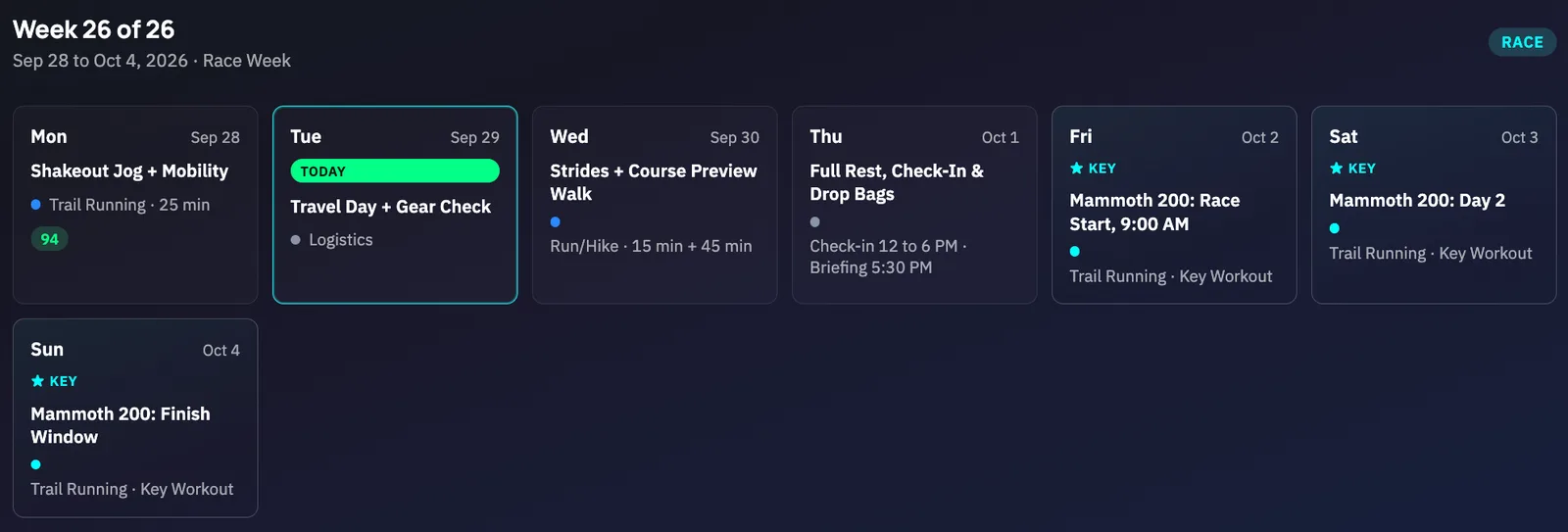
- Injuries don't get lost. Report a niggle and the coach logs it in your health record and keeps it front and center in future chats. It checks in on how it's feeling, can suggest reduced load or cross-training, and can offer to add a rehab protocol to your plan. It's a training tool, not a substitute for a medical professional.
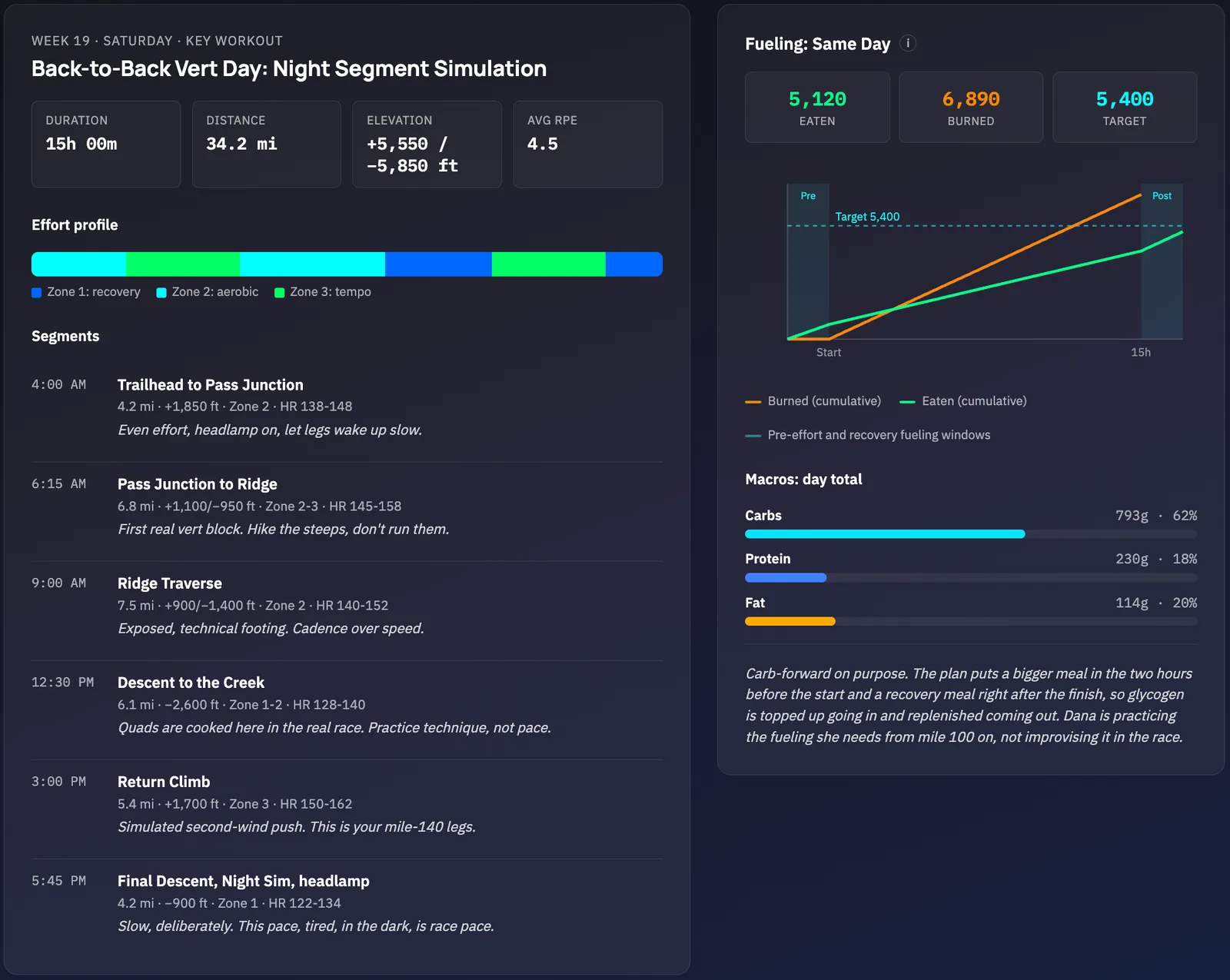
- Nutrition follows your training. Daily calorie targets scale with what's scheduled, so bigger days mean more calories, and those targets match closely to what you actually burned. New: the coach now also builds fueling around your biggest efforts. Backed by research on glycogen, it recommends eating more in the window before a big effort and again after it. That matters most for back-to-back long days.
- Form analysis. Fit PA's form analysis looks at how you move, so small inefficiencies get caught before they cost you miles.
- Race prep, any time. Ask the coach anything about getting to the start line, from logistics and gear to crewing and in-race nutrition.