
Exercise Library
How to perform every strength movement in your training plan — setup, cues, and common mistakes.
Squats & Lunges
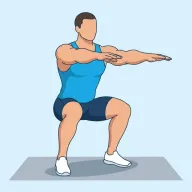
Air Squat
The unloaded squat — the foundational lower-body pattern, used for warm-ups, circuits, and building movement quality.
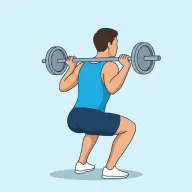
Back Squat
The barbell squat — the heaviest-loadable lower-body strength lift, building quads, glutes, and trunk strength together.
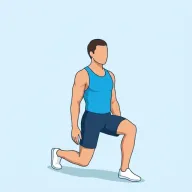
Forward Lunge
The classic lunge stepping forward and pushing back — adds a braking (deceleration) demand that builds resilient quads.
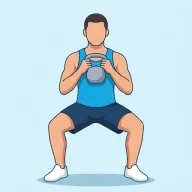
Goblet Squat
A front-loaded squat holding one weight at your chest — the friendliest way to load the squat pattern with an upright torso.
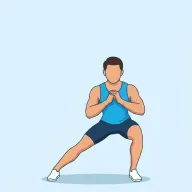
Lateral Lunge
A sideways lunge that strengthens the legs and hips in the frontal plane — movement running never trains but injury-resilience depends on.
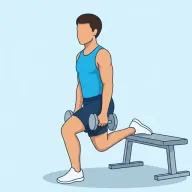
Rear-Foot-Elevated Split Squat
A split squat with the back foot on a bench — one of the best single-leg strength builders for runners.
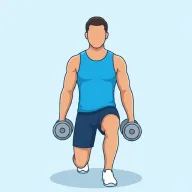
Reverse Lunge
A lunge stepping backward instead of forward — same single-leg strength with less knee stress, so it is often the first lunge to use.
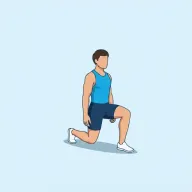
Split Squat
A stationary single-leg squat in a split stance — single-leg strength without the balance demand of a lunge.
Squat Pulses
Small, quick pulsing reps at the bottom of a squat — keeps the legs under tension for a burst of intensity.
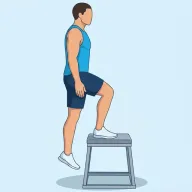
Step-Up
Stepping onto a box under control — single-leg strength with an obvious carry-over to climbing and hills.
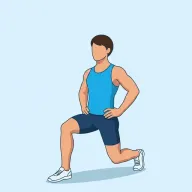
Walking Lunge
Alternating forward lunges travelling across the floor — single-leg strength with a balance and coordination demand that transfers directly to running.
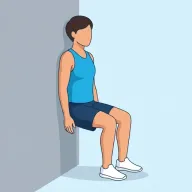
Wall Sit
An isometric squat hold against a wall — quad endurance you can feel, useful late in plans and for knee-tendon conditioning.
Hinges & Glutes
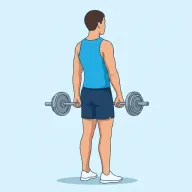
Deadlift
Lifting a barbell from the floor by hinging at the hips — the fundamental full-body strength lift for the posterior chain.
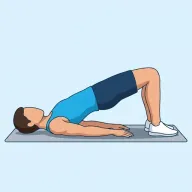
Glute Bridge
Lifting the hips from the floor lying on your back — the simplest glute activation and strength exercise, a staple in warm-ups and rehab.
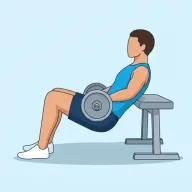
Hip Thrust
Driving the hips up against load with the upper back on a bench — the most direct way to load the glutes heavy.
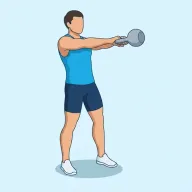
Kettlebell Swing
A powerful hip-snap projecting the kettlebell to chest height — explosive posterior-chain power and conditioning in one movement.
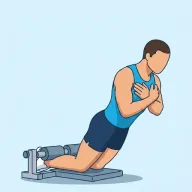
Nordic Hamstring Curl
Lowering your body forward from kneeling under hamstring control — the best-evidenced exercise for reducing hamstring-strain risk.
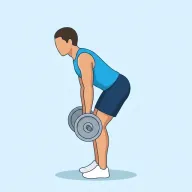
Romanian Deadlift
A hip hinge lowering the weight from standing, keeping the legs nearly straight — the go-to hamstring and glute strength builder for runners.
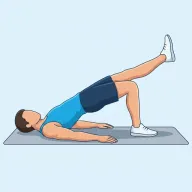
Single-Leg Glute Bridge
The glute bridge on one leg — doubles the load on the working glute and exposes side-to-side differences.
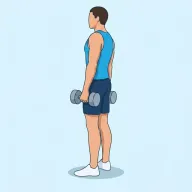
Single-Leg Romanian Deadlift
The Romanian deadlift on one leg — hamstring strength plus the hip stability and balance running actually demands.
Calves & Lower Leg
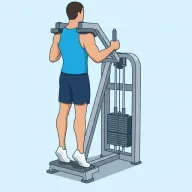
Calf Extension
Pressing up onto the toes on a calf machine — targets the calves through a full range of motion with the load fixed in place.
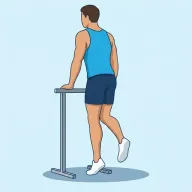
Single-Leg Calf Raise
The calf raise on one leg — the standard for building running-specific calf and Achilles capacity, and the base of most Achilles rehab protocols.
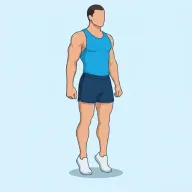
Standing Calf Raise
Rising onto the balls of the feet — the basic strength move for calves and Achilles, the tissues that take the biggest pounding in running.
Hip Stability
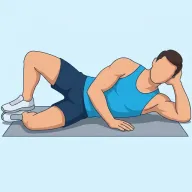
Clamshell
Opening the top knee from side-lying with feet together — targeted activation for the deep glutes that control the knee in running.
Copenhagen Plank
A side plank with the top leg supported on a bench — the standard for building groin (adductor) strength and injury resilience.
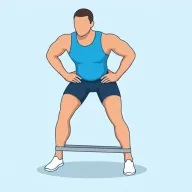
Lateral Band Walk
Sideways steps against a mini-band — glute medius strength for hip and knee control on the run.
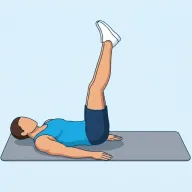
Lying Leg Raise
Raising straight legs from a lying position — a core exercise that emphasizes the lower abs.
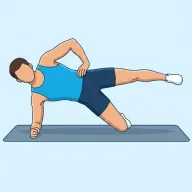
Side Plank Hip Abduction
Lifting the top leg while holding a side plank — combines core stability with hip strengthening.
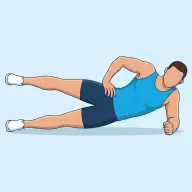
Side-Lying Leg Raise
Raising the straight top leg from side-lying — simple, honest glute-medius strength work.
Core
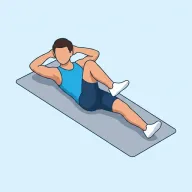
Bicycle Crunch
Alternating elbow-to-opposite-knee crunches with a cycling leg action — abs and obliques with a coordination element.
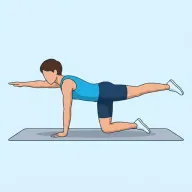
Bird Dog
Extending opposite arm and leg from all-fours with a still trunk — back-friendly core stability and hip-extension control.
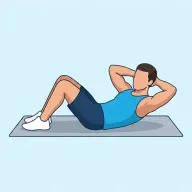
Crunch
The classic short-range ab curl — simple direct ab work when programmed alongside the stability movements.
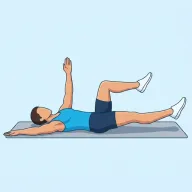
Dead Bug
Lowering opposite arm and leg from your back while the trunk stays rigid — anti-extension core control with zero spinal stress.
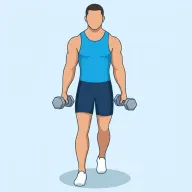
Farmer's Carry
Walking tall with heavy weights in hand — grip, trunk, and postural strength with almost nothing to get wrong.
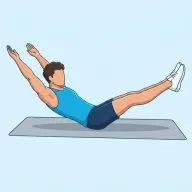
Hollow Hold
The gymnast’s banana-shaped hold — total anterior-core tension that transfers to a stable, tall running posture.
Hollow Rock
Rocking back and forth in a hollow body position — builds core control and full-body tension.
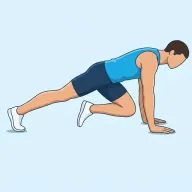
Mountain Climbers
Running the knees toward the chest from a push-up position — core stability under fast limb movement, plus a conditioning hit.
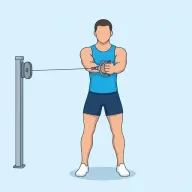
Pallof Press
Pressing a band or cable straight out while it tries to twist you — anti-rotation core strength, the trunk control running quietly depends on.
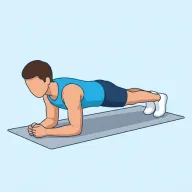
Plank
The basic straight-body hold on forearms and toes — trunk endurance that keeps your running posture from crumbling late in long efforts.
Plank Shoulder Taps
Tapping alternating hands to the opposite shoulder while holding a plank — challenges core and shoulder stability together.
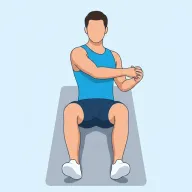
Russian Twist
Rotating the torso side to side from a leaned-back seated position — rotational core strength and control.
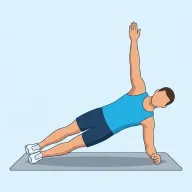
Side Plank
The straight-body hold on one forearm — lateral core strength that stabilizes the pelvis every single running stride.
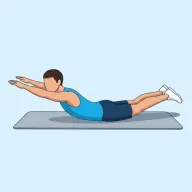
Superman
Lifting chest and legs from lying face-down — simple strengthening for the spinal erectors and glutes that hold you tall when tired.
Upper Body
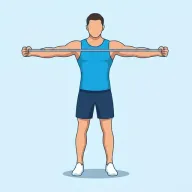
Band Pull Apart
Pulling a resistance band apart at chest height — builds rear shoulder and upper back strength while reinforcing good posture.
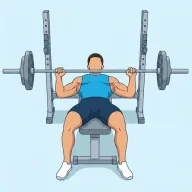
Bench Press
Pressing a barbell or dumbbells from the chest lying on a bench — the standard heavy upper-body push.
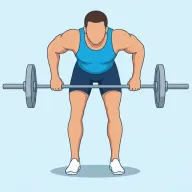
Bent-Over Row
Pulling weight to the torso from a hip hinge — upper-back and lat strength that balances all the pressing and hunching in daily life.
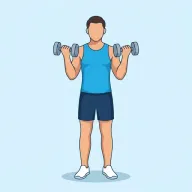
Biceps Curl
Curling weight from a long arm to the shoulder — direct arm strength; hammer grip (palms in) hits the forearms too.
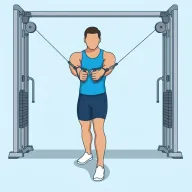
Cable Chest Press
Pressing against constant cable tension — keeps the chest loaded through the full range, easy on the shoulder since the angle is adjustable.
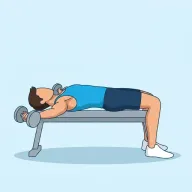
Dumbbell Flye
An arc-path chest movement lying on your back — stretches and loads the pecs without pressing.
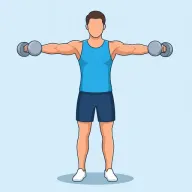
Dumbbell Lateral Raise
Raising light dumbbells out to the sides — the classic shoulder-width builder for the lateral delts.
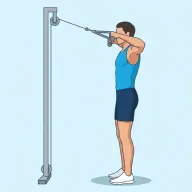
Face Pull
Pulling a rope attachment toward your face — targets the rear shoulders and upper back, a key exercise for shoulder health.
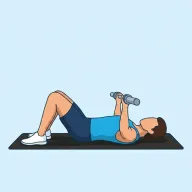
Floor Press
A bench press from the floor — the same pressing pattern with a built-in range limit that spares the shoulders.
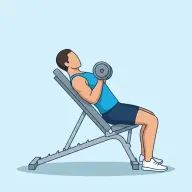
Incline Neutral-Grip Dumbbell Press
Incline pressing with palms facing each other — a shoulder-friendly grip that still builds upper chest and front shoulder strength.
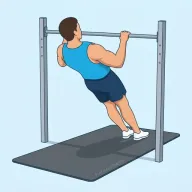
Inverted Row
A horizontal bodyweight pull under a bar or table edge — the pulling twin of the push-up and the on-ramp to pull-ups.
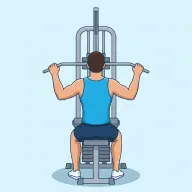
Lat Pulldown
The cable version of the pull-up — same back-building pull, fully adjustable load.
Low-Incline Dumbbell Press
Pressing on a shallow incline — trains the upper chest with less shoulder strain than a steep incline or flat bench.
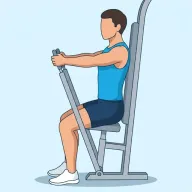
Machine Chest Press
Pressing handles away from the chest on a seated machine - a stable, easy-to-load way to build chest, shoulder and triceps strength.
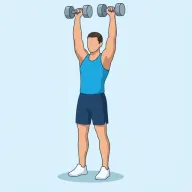
Overhead Press
Pressing weight from the shoulders to overhead while standing — shoulder and trunk strength that carries a tall posture.
Prone Y-T-W Raise
Lying face down and raising the arms through Y, T, and W positions — a shoulder and upper back exercise that hits multiple angles in one movement.
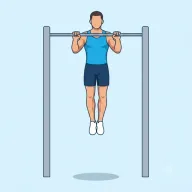
Pull-Up
Pulling your chin over a bar from a dead hang — the benchmark upper-body pull. Chin-ups (palms toward you) are the slightly easier sibling.
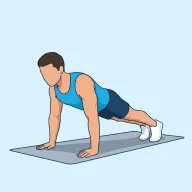
Push-Up
The classic bodyweight press — chest, shoulder, and arm strength wrapped inside a moving plank.
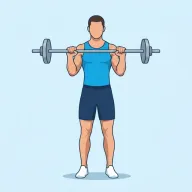
Reverse Curl
A curl with palms facing down — shifts the work to the forearms and brachialis for elbow resilience and grip.
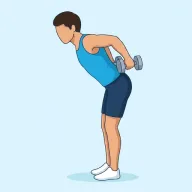
Reverse Fly
Raising light dumbbells out to the sides from a hinged position - isolates the rear shoulders and upper back that keep running posture from collapsing.
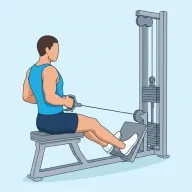
Seated Cable Row
Horizontal pulling on a cable — builds mid-back strength with precise, comfortable loading.
Standing Cable Row
Rowing a cable or band toward the torso while standing - trains the back and rear shoulders with the core working to hold you still.
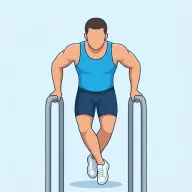
Triceps Dip
Lowering and pressing your bodyweight between bars or off a bench — direct triceps and chest strength.
Y-Raise
Raising the arms overhead in a Y shape — strengthens the lower traps and shoulders, key muscles for posture.
Machines & Isolation
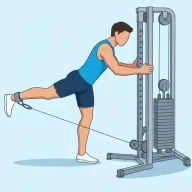
Cable Kickback
Kicking a cable attachment back and up from a hip hinge — isolates the glutes through a controlled range.
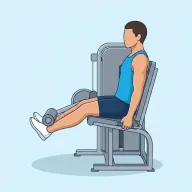
Leg Extension
Extending the legs against resistance on a machine — isolates the quads through a clean, controlled range.
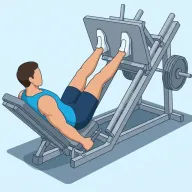
Leg Press
Pressing weight away from the body on a leg press machine — builds lower body strength with the back fully supported.
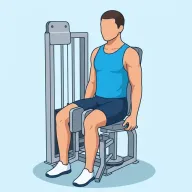
Machine Hip Adduction
Squeezing the legs together on a hip adduction machine — isolates the inner thighs.
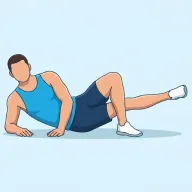
Side-Lying Hip Adduction
Lifting the bottom leg while lying on your side - isolates the inner-thigh adductors that stabilise the pelvis in running.
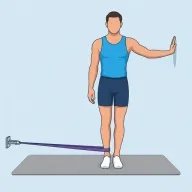
Standing Cable Adduction
Pulling the leg across the body against cable resistance — isolates the inner thigh.
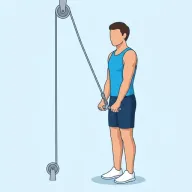
Triceps Pushdown
Cable pushdown — isolates the triceps through a clean, controlled range.
Power & Plyometrics
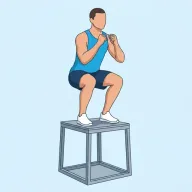
Box Jump
An explosive two-foot jump onto a box with a soft landing — leg power and landing mechanics for stronger, springier strides.
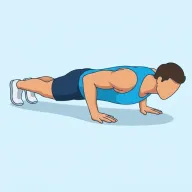
Burpee
Squat-plank-push-up-jump in one continuous movement — full-body conditioning that shows up in circuits and time-crunched sessions.
Pogo Hop
Fast, springy straight-leg hops off the ankles — trains tendon stiffness and elastic recoil, the free speed in your stride.
Single-Leg Hop & Stick
A single-leg hop landing frozen in place — landing control and ankle-knee-hip stability, the plyometric with the most direct injury-prevention payoff.
Sled Drag
Dragging a loaded sled by a strap or harness — targets the legs from a different angle than pushing, with a strong quad and hip flexor demand.
Sled Push
Pushing a loaded sled across the floor — builds full-body power and leg drive with almost no joint impact.
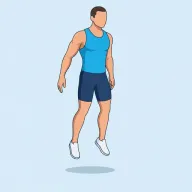
Squat Jump
A countermovement squat exploding into a vertical jump — straightforward leg power with a soft, controlled landing.
Wall Balls
Squatting into a med ball throw against a wall target — combines lower body power with a conditioning demand.
Mobility & Recovery
Ankle Mobility
Rocking and rotating the ankle through its range of motion — keeps the joint mobile for running and squatting.
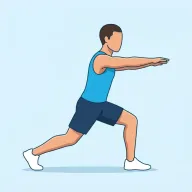
Calf & Soleus Stretch
Static holds targeting both the calf and the deeper soleus muscle underneath it.
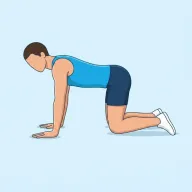
Cat-Cow
A gentle spinal flow that alternates between arching and rounding the back — a classic warm-up or release for the spine.
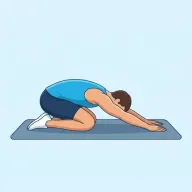
Child's Pose
A resting stretch that releases the lower back, hips, and shoulders.
Figure-4 Glute Stretch
A lying stretch that targets the glutes and outer hip using a figure-4 leg position.
Foam Roll: Calves
Rolling the calf muscle over a foam roller to release tightness from running or standing training.
Foam Roll: Glutes
Rolling the glute muscles over a foam roller to release tightness, especially helpful after lower body training.
Foam Roll: Hamstrings
Rolling the back of the thigh over a foam roller to release tightness in the hamstrings.
Foam Roll: IT Band
Rolling the outside of the thigh over a foam roller - eases the tissue along the IT band and the outer quad that gets cranky with running volume.
Foam Rolling
Rolling major muscle groups over a foam roller to release tightness after training.
Foot & Plantar Release
Gentle self-massage and stretching for the bottom of the foot.
Hamstring Sweeps
A combination of dynamic sweeps and static holds to release tight hamstrings.
Hip Openers
A pair of positions that open the hips from different angles — the 90/90 for rotation, the couch stretch for the hip flexors.
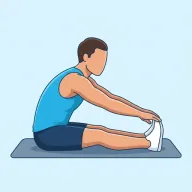
Seated Forward Fold
Folding forward over straight legs from sitting - a long, gentle hamstring and lower-back stretch to finish a session.
Seated Hamstring Stretch
A seated stretch that targets the hamstrings using a simple forward reach.
Shoulder Circles
A combination drill that mobilizes the shoulders through circles, then reinforces good positioning with wall slides.
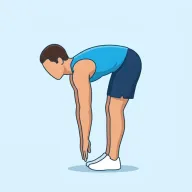
Standing Forward Fold
A simple standing stretch that releases the hamstrings and lower back.
Thoracic Rotations
Rotating and extending the upper back — opens up the thoracic spine for better posture and overhead movement.
World's Greatest Stretch
A flowing sequence that moves through a deep lunge, rotation, and hamstring stretch — covers the hips, spine, and legs in one movement.
More Exercises
Ankle Inversion
Turning the sole of the foot inward against a band - strengthens the tibialis posterior, the arch-support muscle that shin and plantar problems love to blame.
Around the World
Circling a light weight around the head or body — shoulder mobility and control through a full circle of positions.
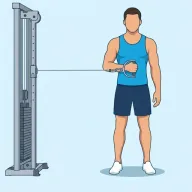
Band External Rotation
Rotating the forearm outward against band resistance — a rotator cuff exercise that builds shoulder stability.
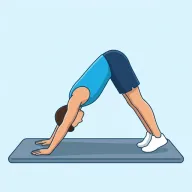
Downward Dog
An inverted V hold on hands and feet - lengthens the calves, hamstrings and spine while opening the shoulders; a staple runner cool-down pose.
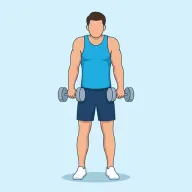
Dumbbell Shrug
Straight-arm shoulder elevation with heavy dumbbells — direct upper-trap strength for posture and carries.
Eccentric Step-Down
A slow-lowering step-down that emphasizes the eccentric phase — builds knee control and quad strength for downhill running.
Hip Circles
Drawing slow circles with one knee from standing - takes the hip through its full range to warm it up and keep it moving well for running.
Lateral Bound
Pushing off one leg to jump sideways and land on the other, sticking the landing - builds the lateral power and single-leg landing control that protect the knees on trail and track.
Lateral Step-Down
Stepping down sideways off a box under control — single-leg strength and knee control through a lowering motion.
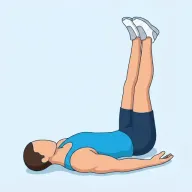
Legs-Up-The-Wall
Lying on your back with the legs resting up a wall - a passive recovery position that drains tired legs and calms the nervous system after hard training.
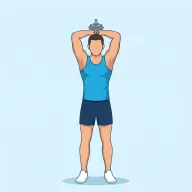
Overhead Triceps Extension
A single-weight press from behind the head — isolates the triceps through their longest range.
Reverse Snow Angel
Lying face down and sweeping the arms like a snow angel — strengthens the upper back and rear shoulders with just body weight.
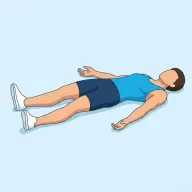
Savasana
Lying still on your back with the whole body relaxed - the closing rest of a recovery session, letting the nervous system settle after training.
Single-Leg Balance Reach
Balancing on one leg while reaching the opposite arm and leg out — adds a dynamic reach to a standard balance hold.
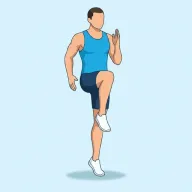
Standing March
Driving one knee up at a time while standing tall - a hip-flexor and single-leg stability drill that doubles as a runner-specific warm-up.
Standing Single-Leg Balance
Balancing on one leg — builds ankle, knee, and hip stability with no equipment needed.
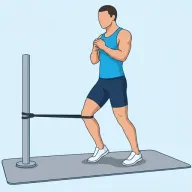
Terminal Knee Extension
Straightening the knee the last few degrees against a band - targets the inner quad that controls the kneecap, a staple of knee rehab and knee-pain prevention.
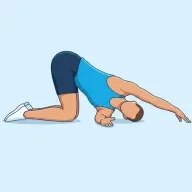
Thread the Needle
Sliding one arm under the body from all fours into a gentle twist - opens the upper back and shoulders after long runs or desk days.
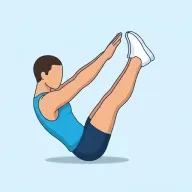
V-Up
Folding the body into a V shape from a lying position — a dynamic core exercise that hits the abs top to bottom.
Wall Slide
Sliding the arms up and down a wall while maintaining contact — improves shoulder mobility and posture.
Illustrations: Exercise data by RepDB (repdb.co)