
Includes what changes (and what doesn't) for women, how to strength train, how to fuel and recover, and how to lower your injury risk.
You just ran the farthest you have ever run. A comfortable 5K feels within reach. Now you want to get faster, and a 12:30 per mile average (about 7:45 per km, or roughly a 38:50 5K) feels like the right target, because your knees, hips, and ankles would rather not go on strike.
That is a smart, realistic goal, and the research gives a clear picture of how to get there. This guide explains how speed is built inside your body, what the strongest studies say about training, how women's adaptations compare to men's, what to do in the gym, how to eat and recover, and how to keep yourself healthy while you get faster.
A note on evidence. Throughout this guide, numbered references point to the studies at the bottom. Where a recommendation comes from coaching practice rather than a trial, it is labeled coaching practice. Where the research is thin, especially for women, we say so.
The short version
- Speed comes from three things: how much oxygen your muscles can use, how hard you can run before fatigue builds, and how little energy you waste at a given pace. Your nervous system and muscles matter too.
- Most of your running should be easy. A small share should be hard.
- Lifting weights and a little jumping improve running economy in many trials, and the best-supported dose is two sessions a week for at least 10 weeks. The running benefit is less certain in women, where trials are few and mixed.
- Women and men appear to improve by similar relative amounts from interval training, but women are under-studied. Combining lifting and running blunted lower-body strength gains in men but not in women in one large meta-analysis, though the women's data are thinner. Fueling, iron, and bone health deserve extra attention.
- Nutrition and sleep are part of training. Under-fueling can undo the work.
- Add speed slowly. The "10% rule" is not backed by good evidence, but sudden jumps in intensity, hills, and surfaces are still worth avoiding.
Men, Women, or Both: A Quick-Reference Table
Most of this guide applies to every runner. This table shows where the research suggests sex matters and where it does not, so you can jump to the sections most relevant to you. Nothing here replaces the full explanations; each row points to where the detail lives.
| Topic | What the research shows | Applies to | Read more |
|---|---|---|---|
| Interval training gains | VO2max improved by similar amounts in women and men after interval training [9] | Both | Section 3 |
| Endurance training in untrained people | An earlier meta-analysis found larger VO2max gains in men than women; in one year-long study, women's gains plateaued sooner [22, 23]. Women still improved | Mostly a difference between the sexes, women still benefit | Section 3 |
| Strength gains from lifting | Relative gains in muscle size and lower-body strength were similar in men and women [24] | Both | Section 3 |
| Lifting plus running (the "interference effect") | Lower-body strength gains were blunted in men but not in women; power gains were smaller in both. Data for women come from fewer studies [45] | Men more affected; women's evidence thinner | Sections 3 and 4 |
| Lifting to improve running economy | Most trials were in men or mixed groups. The two women-only trials found no significant running-economy improvement [46, 47] | Evidence is strongest in men or mixed groups; less certain in women | Section 2 |
| Same-day lifting and running | No study compared same-day and separate-day scheduling by sex. One small trial in women found no compatibility problems [46] | Both; women's evidence is one small trial | Section 4 |
| Sprint intervals vs. controlled intervals | In trained women, all-out 10 x 30 s sprint intervals produced eight injuries and did not raise VO2max; 4 x 4 min intervals raised VO2max and produced none [11] | Studied in women | Sections 3 and 8 |
| Menstrual cycle | Effects on performance were trivial and inconsistent; no general "cycle-syncing" guideline is supported [25, 26, 27] | Women | Section 3 |
| Iron | Iron deficiency reduced endurance performance by about 3 to 4% in female athletes; it is reported as more common in female than male endurance athletes, but it affects both [34, 48] | Both; most evidence in women | Section 6 |
| Low energy availability (REDs) | Common in both male and female athletes; inadequate carbohydrate is a highlighted concern [32] | Both | Section 6 |
| Bone stress injuries | In women, risk factors include menstrual dysfunction, low energy availability, sudden intensity increases, and hills [42, 43] | Women studied; men are not immune | Section 8 |
| Sleep | Female gender is listed as a risk factor for poor athlete sleep; studies have often under-included women [21] | Women more at risk | Section 7 |
Why the gaps? Women made up only about 35% of participants in performance research in one review [19]. Where a row says "women's evidence is thinner," that is a limit of the research, not evidence that women respond worse.
1. What "faster" means inside your body
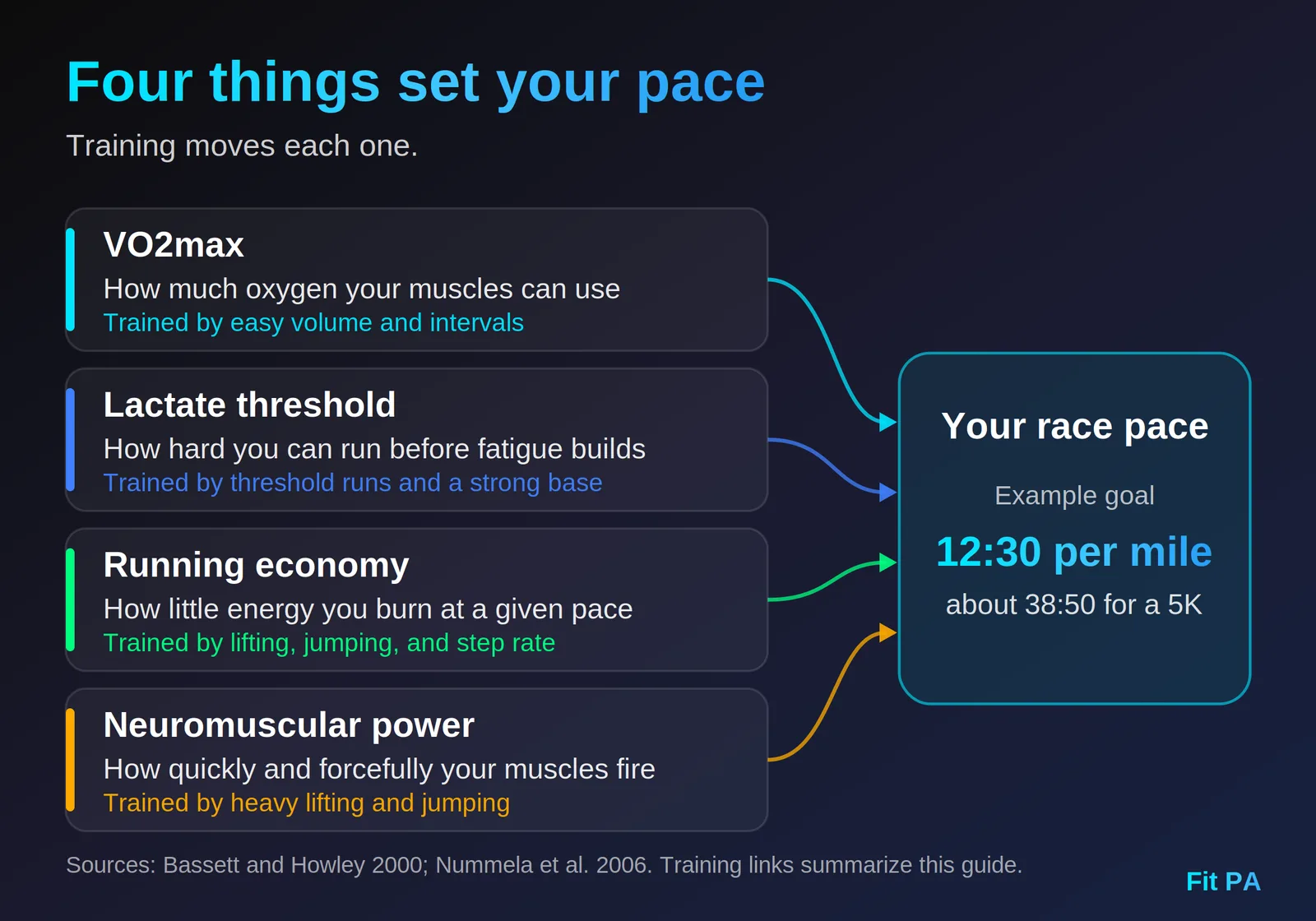
Distance running performance is usually explained by three factors: VO2max (the most oxygen your body can use per minute), lactate threshold (roughly, the pace you can hold before fatigue starts building quickly), and running economy (how much energy you burn at a given speed) [1]. The speed at your lactate threshold combines all three and is considered the best physiological predictor of distance running performance [1].
Training changes these at the muscle level. Adaptations include more tiny blood vessels (capillaries) and greater blood flow inside the muscle, plus bigger and more numerous mitochondria, the cell structures that make energy [2]. Running economy is simply the energy demand at a submaximal speed [4]. Better economy means 12:30 pace costs you less.
There is also a fourth piece on the nervous-system side, called neuromuscular power: how quickly and forcefully your muscles fire. In one study of 18 well-trained male runners, the ability to produce power above VO2max, combined with VO2max itself, explained 73% of the variation in 5K speed, and neural drive to the muscles appeared to play a role [3].
In plain English: being able to "recruit" your muscles quickly and forcefully matters, not just having a big engine. That study shows an association, not proof that training this ability will make you faster. What we do know is that lifting and jumping improve measures of it. In middle-aged recreational runners, 10 weeks of twice-weekly lifting or plyometrics both improved jump performance [14]. In well-trained women, 11 weeks of heavy leg training raised jump height, although their running performance did not change [47]. Section 2 and Section 4 cover how to train it.
2. The evidence-based training principles
Principle 1: Keep most runs easy
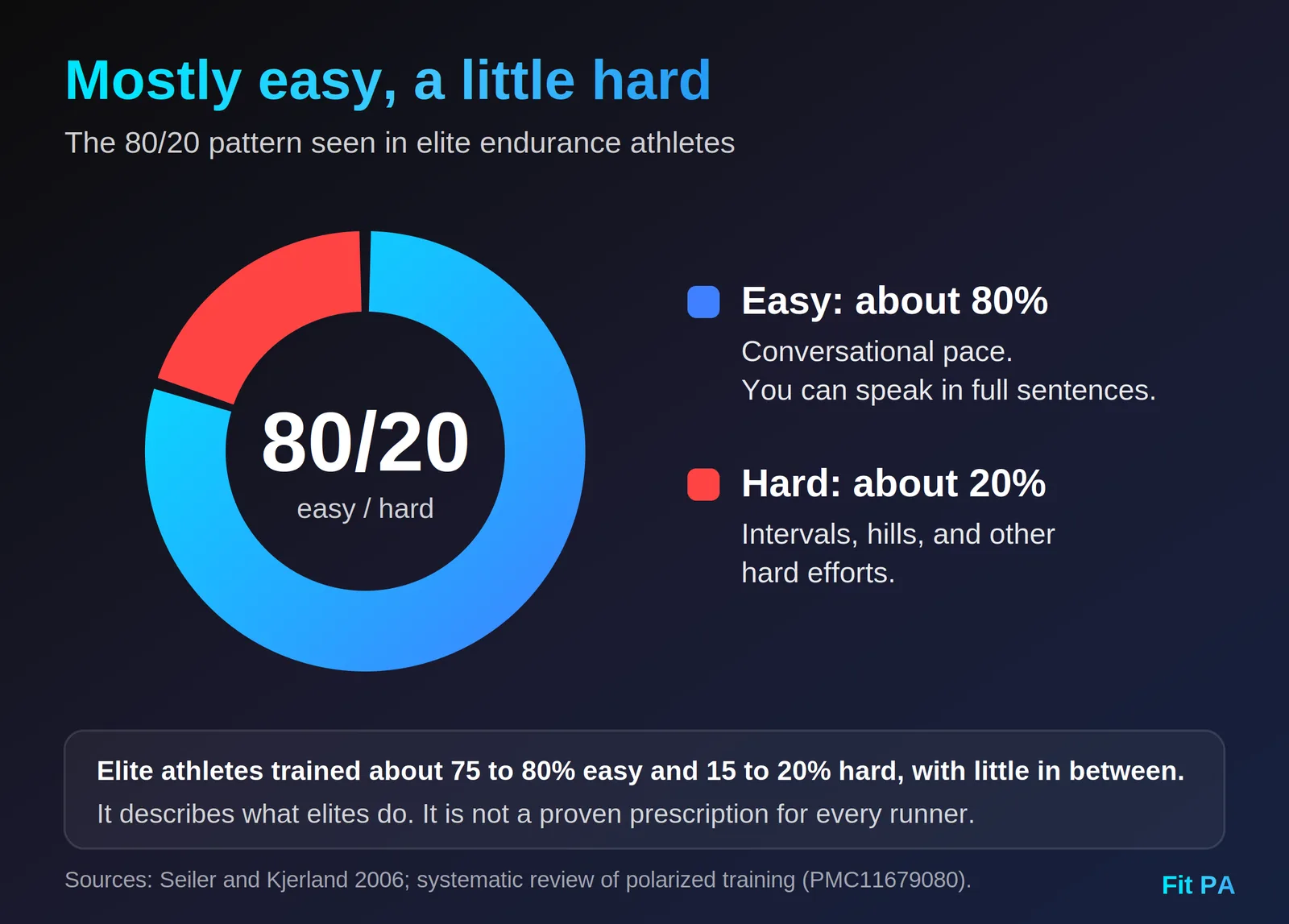
Studies of elite endurance athletes found that roughly 75 to 80% of their sessions were at low, conversational intensity and 15 to 20% at high intensity, with little in between. This is often called polarized or "80/20" training [5]. A systematic review of 14 studies found that a polarized approach appeared effective for improving VO2max and running economy over the short term, and it cited a trial where recreational athletes training about 73% easy and 14% hard improved their 10K over 10 weeks [6]. A separate randomized comparison found polarized training had a greater impact on key endurance variables than threshold, high-intensity, or high-volume training [7].
Honest limits: these trials are short, small, and mostly in trained athletes. The 80/20 split describes what elites do; it is not a validated prescription for everyone [6].
Coaching practice: "easy" should let you speak in full sentences. If you can only say a few words at a time, slow down or take a walk break.
Principle 2: Add a small dose of hard running
In a 4-week trial, 16 male recreational runners who did high-intensity intervals twice per week improved running economy by about 7% and peak treadmill speed by about 5%. Their 5K trial performance did not change significantly in that short study [8]. A larger meta-analysis found that HIIT gains in VO2max were significantly smaller when interventions lasted 4 weeks or less than when they lasted longer [9]. The takeaway: intervals work, but give them time.
You also have options. A meta-analysis focused on women found that moderate-to-vigorous continuous training and HIIT improved VO2max by similar amounts. More weekly sessions gave bigger improvements, and longer intervals beat very short ones [10]. So if intervals feel like too much for your joints right now, steady, moderately hard continuous running is a legitimate route.
Principle 3: Lift weights
In highly trained middle- and long-distance runners, a program of resistance exercise plus plyometrics, done 2 to 3 times per week for 8 to 12 weeks, improved running economy [12]. A later meta-analysis of 22 studies found a small benefit to running economy from heavy resistance training and a trivial one from plyometric training. Heavy resistance training with near-maximal loads may be the most effective, and programs of 10 weeks or longer worked better [13].
Does this work for regular runners? In a 10-week trial of 20 middle-aged recreational runners, twice-weekly lifting (leg press, leg curl, calf raise at 50 to 90% of one-rep max) or plyometrics both improved jump ability and cut the oxygen cost of running by about 2%, with no significant difference between groups. Strength rose roughly 19 to 21% in the lifting group [14]. We could not confirm from the available abstract text whether 5K time itself changed, so we do not claim it did.
A narrative review concluded that lower-limb resistance training robustly improves running economy and performance, with a combination of strength and plyometric training recommended, and that isometric (static hold) work is an emerging option during heavy training periods. It also noted that resistance training may reduce running-related injury risk, but more evidence is needed [15].
A caution for women. Most running-economy trials above were done in men or in mixed groups. The two trials we found in women only were less clear. In 19 well-trained women, 11 weeks of twice-weekly heavy leg training raised leg strength by about 40% but did not change running economy, VO2max, or 40-minute all-out running performance [47]. In 16 recreationally fit young women, 10 weeks of added heavy strength training produced a non-significant trend (P = 0.07) toward a bigger 3 km improvement, with no significant differences in VO2peak or running economy [46]. Both trials were small. They do not show that lifting fails to help women runners, but they do mean the running benefit is less certain in women than the strength benefit, so this guide keeps its promises about lifting modest.
Principle 4: Add a little jumping
Plyometrics (hops, skips, jumps) train the tendons and muscles to store and return energy. They are best seen as a supplement to lifting, not a replacement, given the smaller pooled effect above [13, 15]. Start with low-impact versions and build slowly.
Principle 5: Look at your step rate
Lab studies of 45 recreational runners found that raising step rate by 5% reduced the energy absorbed at the knee, and a 10% increase reduced it at the hip too, along with shorter steps and less up-and-down bounce [16]. In a modeling study of 30 healthy adults, a 10% higher step rate reduced peak force on the kneecap joint by about 14%, though hamstring and quadriceps loads during the swing phase rose [17]. Changes bigger than about 10% are generally associated with a higher energy cost [16]. A prospective study of collegiate cross-country runners also linked a lower step rate to a higher risk of bone stress injury [18].
Caveats: most of this is short-term lab work. It shows lower joint loading, not proven fewer injuries. Change cadence gradually (about 5% at a time) using a metronome or a playlist at the right tempo (coaching practice).
3. Do men and women adapt differently?
This is a fair question, and the honest answer is: a little, in some areas, but less than you might fear, and women are badly under-studied.
The research gap
A 2022 review noted that women made up only about 35% of participants in sports performance research [19]. A 2023 systematic review of concurrent strength and endurance training noted that only a small portion of that research was done in females [20]. Athlete sleep research has also often lacked female participants [21]. Even some studies cited in this guide used only men (for example, the 4-week interval study and the neuromuscular 5K study above [3, 8]). Much of what coaches apply to women is extrapolated from men.
What the research shows about interval training
- Overall: A systematic review with meta-analyses of HIIT found similar VO2max improvements in women and men (both about g = 0.57), with no significant sex differences for the primary outcomes. In well-trained participants, peak power output improved more in women than men (g = 0.37 vs 0.17). Baseline training status and program length explained most of the variability [9].
- Trained women: In an 8-week trial of 81 well-trained young women (about 52 ml/kg/min VO2max) training three times per week, only the classic 4 x 4 minute aerobic intervals raised VO2max (by 7.3%). Two all-out sprint-interval formats did not. The 10 x 30 second sprint protocol produced eight training injuries; the 4 x 4 minute intervals produced none. All groups improved 3000 m running performance [11]. Takeaway: for trained women, hard-but-controlled intervals looked both effective and safer than all-out sprint intervals.
- Untrained participants: The picture is mixed. A meta-analysis of eight studies in healthy untrained people (90 men, 85 women) is cited as finding larger VO2max gains in men after moderate-intensity endurance training [9, 22]. In one year-long study of previously sedentary adults, women reached their maximal heart-muscle adaptation after about three months and their VO2max plateaued earlier, while men kept improving longer [23]. Reviewers noted that training matched for volume and intensity may simply suit men's physiology better, which is exactly why sex-specific research is needed [19]. These findings do not mean women cannot improve. Women in the studies above did improve. They mean the best plan may look slightly different, and we need more data.
Strength training
A meta-analysis found no significant difference between males and females in muscle growth, and similar gains in lower-body strength when using the same program. Upper-body strength gains favored females [24]. So women get comparable relative strength gains from heavy leg work. Whether that strength converts into faster running is less clear in women (see the caution under Principle 3).
Does combining lifting and running blunt gains differently in women?
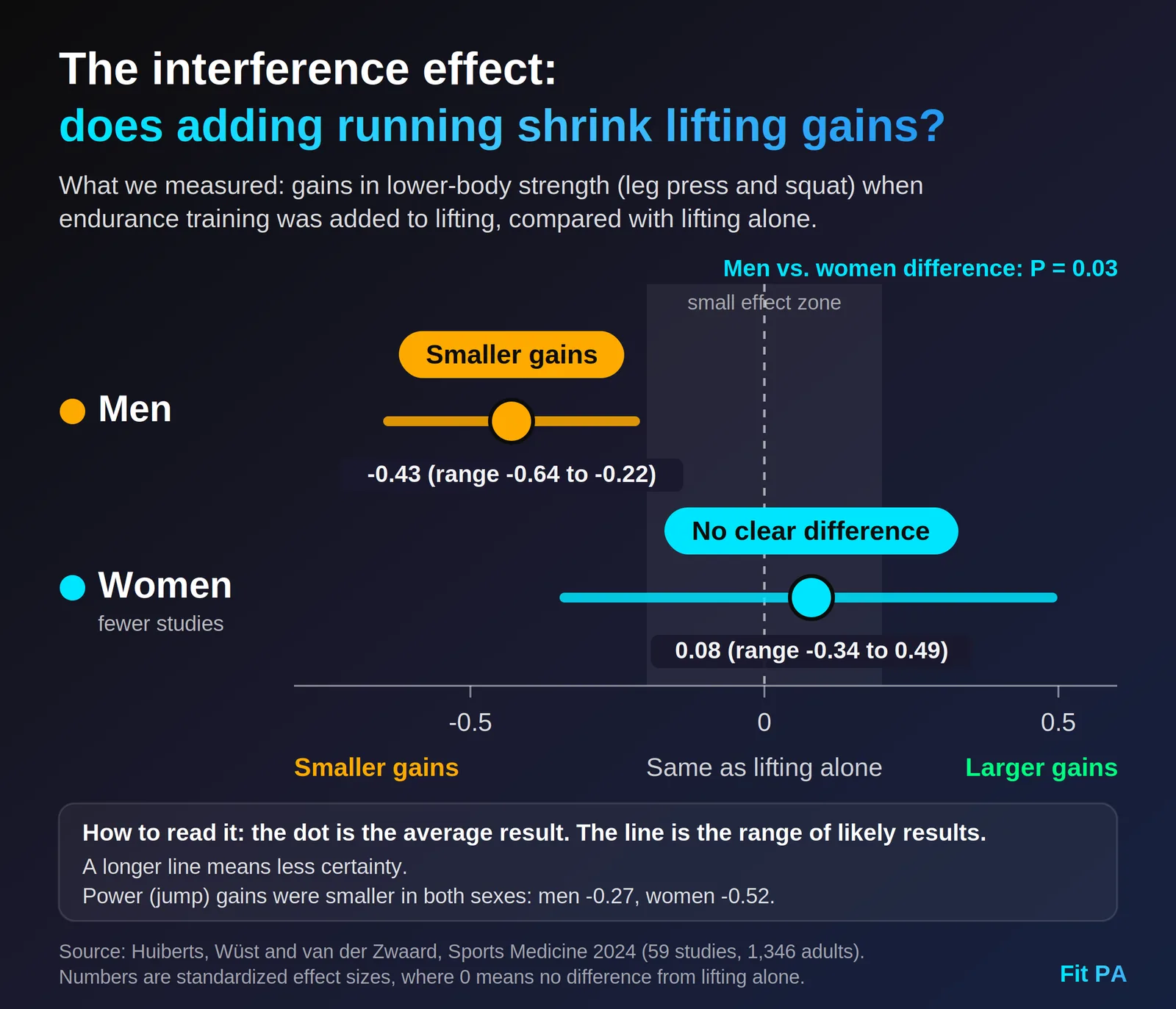
This is the question behind the "interference effect": when you train for strength and endurance at the same time, some adaptations can be smaller than if you trained only one way. A 2024 meta-analysis examined sex differences directly [45]:
- It pooled 59 studies and 1,346 healthy adults aged 18 to 50.
- Lower-body strength gains were blunted by concurrent training in men (standardized effect -0.43) but not in women (0.08, with a wide range of plausible values from -0.34 to 0.49). The difference between the sexes was statistically significant (P = 0.03).
- There were no significant sex differences for upper-body strength, power, or VO2max. Power gains were smaller with concurrent training in both women (-0.52) and men (-0.27).
- Participants who were untrained in endurance, but not trained or highly trained ones, had smaller VO2max gains with concurrent training.
- Muscle-growth data existed only for men, so no sex conclusion was possible.
The authors do not know why. They point to possibilities such as men's larger muscle fibers and greater fatigability after endurance work, but these are hypotheses, not findings. Their practical advice was that men should be extra cautious about lower-body strength when combining training, while it seems to be less of an issue for women [45]. How solid is that? Treat it as a promising signal, not a settled fact:
- Women were represented by fewer studies than men, and the range of plausible values for women is wide [45].
- Most included studies used relatively untrained participants, and highly trained athletes were under-represented [45].
- Menstrual cycle phase and oral contraceptive use were not always controlled or monitored in the studies with women [45].
- The outcomes were lifting strength, jump power, and VO2max, not race times.
- A separate systematic review of concurrent training in women concluded that it appears beneficial for strength and endurance capacity, but that an interference effect could not be assessed because it was not the focus of any included study [20].
The accurate summary: women do not appear to lose lower-body strength gains from combining lifting with running the way the pooled data suggest men may, but the evidence base is smaller, and women are not immune to every form of interference (power gains were reduced in both sexes).
The menstrual cycle
A meta-analysis found that exercise performance might be trivially reduced in the early follicular phase compared with other phases, but the effect was small, studies were inconsistent and often low quality, and the authors concluded that general guidelines cannot be formed. They recommended a personalized approach based on how each individual responds [25]. An umbrella review concluded it was premature to say that short-term hormone fluctuations appreciably influence strength performance or training adaptations [26]. A randomized trial in 24 women over three cycles found that periodizing lifting volume by cycle phase did not change gains in muscle size or strength [27].
Practical translation: don't rely on a generic "cycle-syncing" chart. Track your own energy, sleep, and performance across your cycle and adjust to your patterns.
Women-specific health issues that affect training
Under-fueling, iron deficiency, and bone stress injuries deserve attention for all runners and appear especially important for women. See the fueling and risk sections below.
4. Strength training in practice
What the evidence supports
- Lower-limb resistance training plus plyometrics, two sessions per week, for at least 8 to 12 weeks, ideally 10 or more [12, 13].
- Heavier loads appear to help most in trained runners [13]. Beginners should build technique and tolerance first.
- Strength work is not only about speed. Hip abductor and external rotator muscles help control the leg's position in side-to-side and twisting directions, and weakness or poor control there is linked in the literature to problems such as patellofemoral pain and IT band syndrome [15].
Bilateral (two-leg) vs. unilateral (one-leg): which is better?
No study we found compared these head-to-head for running economy. The closest evidence is from athletes in general:
- A meta-analysis found bilateral exercises produced a small advantage for improving bilateral strength, while unilateral exercises were preferable for improving unilateral jumping. Differences in bilateral jumping, change-of-direction, and sprint speed were not significant [28].
- A meta-analysis of nine trials in male basketball players found no significant differences for bilateral jump, reactive strength, or 5 m and 20 m sprints. Unilateral training was better for single-leg power and cutting ability [29].
What this means for runners: training transfers best to what it resembles (the specificity principle). Running is a series of single-leg landings, which argues for including one-leg work. Two-leg lifts let you load heavily and safely to build a strength base. Doing both is a sound approach. (This is reasoning from the evidence, not a runner-specific trial.)
A sample exercise menu (coaching practice built on the principles above)
The trials above used leg press, squat-type lifts, leg curls, calf raises, and jumps [14]. The specific choices below are practical selections consistent with that evidence.
Two-leg (bilateral) strength
- Goblet squat or leg press
- Romanian deadlift (hip hinge)
- Glute bridge or hip thrust
- Straight-knee and bent-knee calf raises
One-leg (unilateral) strength
- Step-ups (start low)
- Split squat or reverse lunge (skip if they bother your knees)
- Single-leg Romanian deadlift
- Single-leg calf raise
- Side-lying or banded hip abduction, and single-leg bridge
Trunk
- Side plank
Jumping (add gradually)
- Pogo hops and skipping, then low box drops, then hurdle hops or box jumps
Isometric option
- Wall sits or split-squat holds during high-mileage weeks [15]
How much, and how heavy? (coaching practice)
- Beginner: 2 sessions per week, 2 to 3 sets of 8 to 12 reps with light weights or bodyweight. The last two reps should feel challenging with good form. Progress the load every week or two.
- Intermediate: Same frequency, heavier loads, 3 to 4 sets of 5 to 8 reps on the main lifts.
- Advanced: Heavy sets of 3 to 6 reps on major lifts, plus targeted jumping, maintained through the season. Near-maximal loads were associated with the best results in the meta-analysis [13], but only build up to them with a solid base and good technique.
Should you lift on the same day you run?
Short answer: for most runners, schedule strength wherever you will actually do it. But no study we found has directly compared same-day and separate-day scheduling in women versus men, so treat the guidance below as practical, not proven.
What the research can and cannot tell you:
- Timing, both sexes combined. A meta-analysis of 27 studies compared lower-body strength (leg press and squat one-rep max) in people doing lifting alone versus lifting plus endurance training. In the "trained" group, adding endurance work reduced strength gains (effect size -0.35). There was no effect in untrained people (0.03) and a smaller, non-significant effect in moderately trained people (-0.20). In the trained group the reduction was seen when lifting and endurance work were done in the same session, and it appeared to be more pronounced than when they were done in separate sessions. The authors called the impairment moderate. They said athletes short on time can still combine sessions and get appropriate strength gains, and that trained individuals may want to separate the two when maximal strength is the priority [30].
- Sex. The later, larger meta-analysis found blunted lower-body strength gains in men but not in women (see Section 3) [45]. It did not analyze same-day versus separate-day scheduling by sex.
- Training status is disputed. The 2024 meta-analysis found no differences in strength or power outcomes between untrained and trained participants. It noted that the earlier meta-analysis classified some groups as moderately trained that it classified as untrained, so findings about who is "trained enough" to be affected depend on how training status is defined [45].
- Women and same-day training, directly. In one 10-week trial, 16 recreationally fit women did heavy strength training in the morning of each of their three weekly afternoon runs. The authors reported no compatibility problems, a trend toward a bigger 3 km improvement (about 107 seconds vs 77 seconds for running alone, P = 0.07), and no significant differences in VO2peak or running economy [46]. This is the closest direct evidence, but it is small, involved only young recreational women, and separated the sessions by several hours.
Two limits apply to all of it. Most of this research measured lifting strength, not running speed, so none of it shows that same-day training slows a runner down. And we could not see how the first review defined "trained," so do not assume it means "experienced runner." Practical guidance (coaching practice, consistent with the evidence above):
- If you are new to lifting or running, or short on time, combining sessions is reasonable. Based on the data above, women in particular have no evidence-based reason to avoid it.
- If you double up, lifting in the morning with a few hours before a run matches the schedule used in the trial in women [46]. In a heavy-strength trial in well-trained women, athletes were encouraged to use separate days and to lift first when they had to do both [47].
- Avoid stacking your hardest interval session and your heaviest lower-body lift back to back when you can. Two hard demands on the same legs add fatigue.
- If your priority is maximal lower-body strength and you are experienced with lifting, separating sessions by hours or days is a reasonable precaution [30].
5. Putting it together: beginner, intermediate, advanced
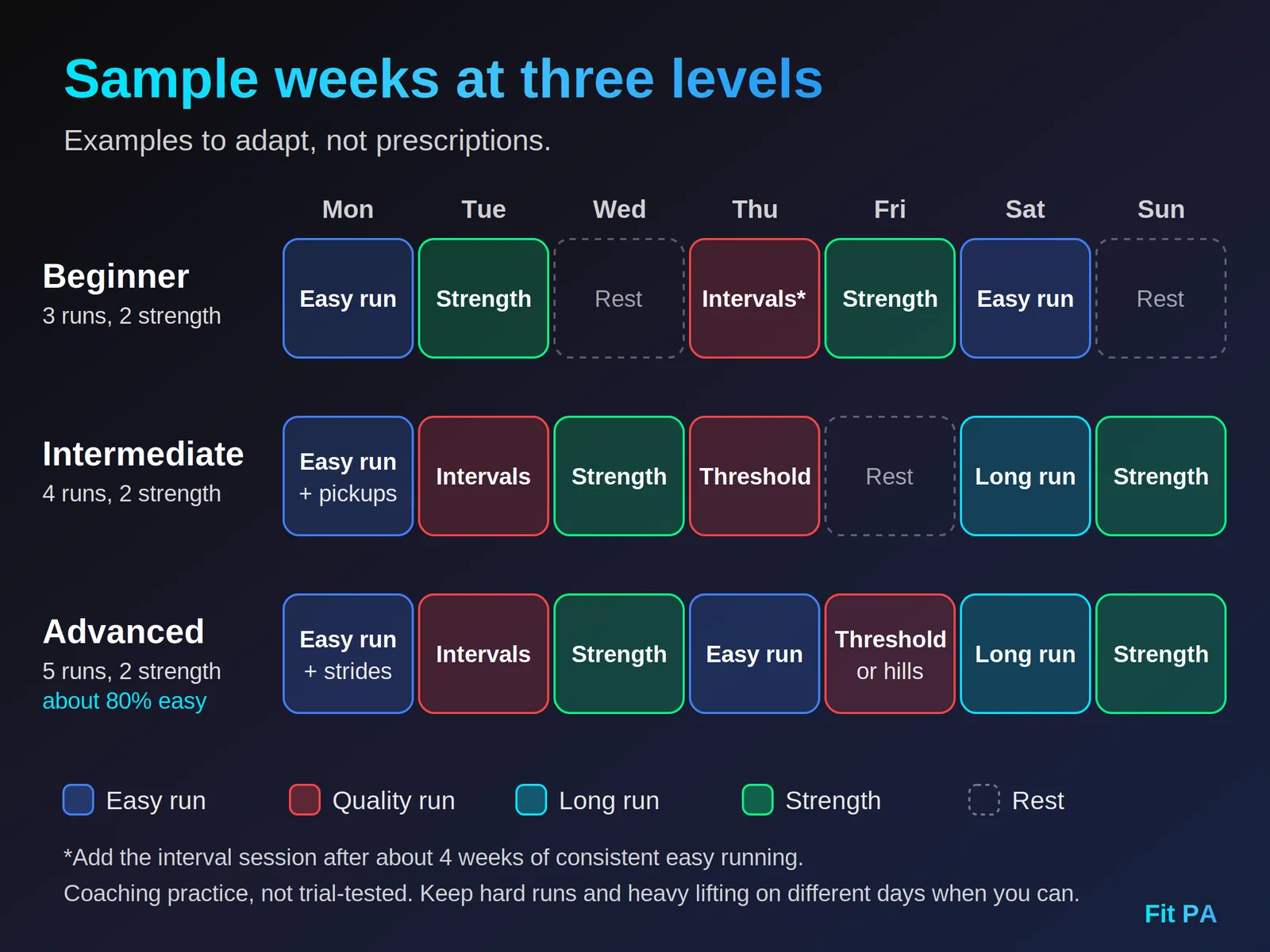
Beginner (finishing your first 5Ks; goal around 12:30 per mile)
- 3 runs per week, mostly easy, with walk breaks as needed. (coaching practice)
- After about 4 weeks of consistency, add one interval session: for example 5 to 6 repeats of 1 minute at a hard-but-controlled effort with 2 minutes of easy jogging or walking. (coaching practice; effort-based rather than pace-based)
- If intervals bother your joints, moderately hard continuous running is a valid alternative [10].
- Strength: 2 sessions per week, bodyweight to light loads, with a mix of two-leg and one-leg exercises.
- Cadence: nudge it up about 5% [16].
Intermediate (regular 5Ks, wants a PR)
- 4 runs per week: one long easy run, one tempo or threshold session, one interval session, one easy run with a few short pickups. (coaching practice)
- Interval example: 4 x 4 minutes hard with 3 minutes easy jogging between. This format is the one studied in trained women [11]. In that trial it was done three times a week under supervision, so recreational runners should generally start with one session per week.
- Strength: 2 sessions per week with progressive loading; a small dose of jumping.
Advanced (experienced, chasing minutes or seconds)
- 5 to 6 runs per week, about 80% easy, two quality days (long-interval VO2max work plus threshold or hill work) [5, 6].
- Heavy strength twice weekly plus targeted plyometrics, maintained in-season [13].
- Periodize: base, build, sharpen, race, recover. Favor controlled intervals over all-out sprint intervals, particularly for women [11].
A simple 12-week roadmap toward 12:30
- Weeks 1 to 4: Three easy runs, two strength sessions, gradual cadence work. End with a benchmark run (same route, hard-but-even effort).
- Weeks 5 to 8: Keep the easy runs, add one interval or steady-hard session, and progress strength loads.
- Weeks 9 to 12: Keep the quality session and add a little work per session. Repeat the benchmark.
Intervals and lifting programs need time. The studies above suggest at least 5 weeks for interval gains and at least 10 for strength gains [9, 13].
6. Fueling for speed
No trial has tested a special "5K diet." What exists are position statements and reviews on the basics.
- Carbohydrate and protein. A joint position statement from the Academy of Nutrition and Dietetics, Dietitians of Canada, and the American College of Sports Medicine recommends athletes eat about 3 to 12 g of carbohydrate per kg of body weight per day depending on training demands, and about 1.2 to 2.0 g of protein per kg per day, spread regularly across the day, with higher protein for short periods of intensified training or when reducing calories [31].
- Enough energy overall. The 2023 IOC consensus on Relative Energy Deficiency in Sport (REDs) describes health and performance problems that follow from eating too little for your training. It is common in both male and female athletes, and the update highlights inadequate carbohydrate intake and overlap with overtraining [32]. Short-term low energy availability is often adaptable with minimal long-term impact, while prolonged deficits are the concern [32]. Some researchers caution that the evidence for the REDs model is still limited and that symptoms have many possible causes, including poor sleep, illness, and stress, so persistent symptoms deserve a proper clinical work-up rather than self-diagnosis [33].
- Iron. A systematic review of 669 female athletes found that iron deficiency reduced endurance performance by about 3 to 4%, and that treated athletes improved by 2 to 20% (studies used around 100 mg per day of elemental iron for up to 56 days). The athletes in that review were high-level (VO2max above 45 ml/kg/min or training more than 5 hours per week), so the numbers may not translate directly to beginners [34]. If you feel unusually fatigued, ask a clinician about a blood test (including ferritin). Do not start high-dose iron on your own.
- Get help when you need it. The position statement recommends referring athletes to a registered dietitian for a personalized plan [31].
7. Recovery: where the gains happen
- Sleep. An expert consensus in the British Journal of Sports Medicine notes athletes are prone to short or fragmented sleep, and that in the wider population, habitually sleeping under 7 hours per night raises susceptibility to respiratory infection. It also recommends an individualized approach rather than a rigid 7-to-9-hour rule, and it lists female gender as a risk factor for poor athlete sleep [21].
- Hard/easy structure. The training principles above depend on genuinely easy days between hard ones [5, 6].
- Recovery techniques. A meta-analysis found that active recovery, massage, compression garments, immersion, contrast water therapy, and cryotherapy all reduced muscle soreness, with massage the most effective for soreness and fatigue. Feeling less sore did not always mean feeling less fatigued [35].
- Cold-water immersion caveat. Repeated post-exercise cold-water immersion may blunt strength and muscle-growth adaptations, though it does not appear to harm endurance adaptations [36]. If you are in a strength-building phase, skip the ice bath after lifting.
- Nutrition for recovery. Regular protein and adequate carbohydrate across the day, as above [31].
- Lighter weeks. Many coaches include a reduced-load week every third or fourth week (coaching practice; we found no trial that validates a specific schedule).
8. The risks of adding speed, and how to lower them
The base rate is high. In a pilot trial of 129 novice runners followed for about six months, 40% had at least one running-related injury [41]. Speed work does not create that risk from nothing, but it can add to it.
How fast is too fast? The famous "10% rule" is not well supported. A systematic review found the evidence on training progression and injury was conflicting and concluded the 10% rule is not justified [37]. A randomized trial found that a graded, 10%-based program did not reduce injuries in novice runners compared with a standard program [38]. Another large study found the relationship between weekly distance increases and injury varied by injury type [39]. The lesson is not "anything goes." It is that no single percentage protects you, so build gradually and pay attention to how you feel.
Practical safeguards (coaching practice unless a citation is shown):
- Change one variable at a time: volume, intensity, or terrain.
- Limit hard sessions to one per week as a beginner and two as an advanced runner, with easy days between.
- Introduce speed gradually: short relaxed pickups first, then hills, then intervals.
- Choose controlled intervals over all-out sprint intervals. In trained women, the all-out 10 x 30 second format produced eight injuries in eight weeks, versus none for 4 x 4 minute intervals [11].
- Keep strength training in your week [15] and build up jumping gradually.
- Raise your step rate gradually [16, 17].
- Use run-walk intervals if you like. They are widely used, but we found no trial proving they lower injury risk, so treat them as a comfort tool, not a guarantee.
- Wear shoes that feel comfortable. A prospective study of over 900 novice runners found foot pronation was not associated with injury risk in a standard neutral shoe [40].
Bone stress injuries. A survey of women runners with stress fractures found risk factors included increased training intensity in a short time, less compliant surfaces, irregular terrain, a higher percentage of running on hills, and the female athlete triad components (low energy availability, menstrual dysfunction, low bone density) [42]. Another study found that bone stress injuries were more common in competitive female distance runners with menstrual disturbances regardless of whether they did plyometric training [43]. In other words, plyometrics were not the problem; under-fueling and menstrual disruption were the flags. If your periods become irregular or stop while you train, talk to a clinician.
Stop signs (coaching practice): pain that changes how you run, sharp or pinpoint bone pain, swelling, pain that worsens as you run, or pain that lingers into the next day. Back off and see a physical therapist or doctor if it persists. If you have a joint condition or other health concern, check with a clinician before adding intervals or heavy lifting.
9. How Fit PA puts this into practice
Everything above works best when it is tailored to you: your history, your schedule, your body, and how you respond. That is what Fit PA's AI coach is built for.
It starts with a conversation, not a form
Connect your watch (Garmin, Coros, Polar, Suunto, Wahoo, Apple Health, or Health Connect) and tell the coach your goal. It reads your training history and asks what matters: your target date, the days you can train, equipment you have, any niggles, upcoming travel, even a training philosophy you like. Then it shows you the numbers before anything is built. Before a plan is created, Fit PA checks it against what you have actually run, including recent weekly volume and your longest routine run, and if a proposed jump does not add up, the coach shows you the numbers and asks instead of quietly building a plan you cannot hold. [44]
Built for every level
- If you are new (like the reader aiming for a comfortable 5K and then 12:30 per mile): the coach builds a progressive plan around your goal, your available days, and your experience, and it explains why each session is there.
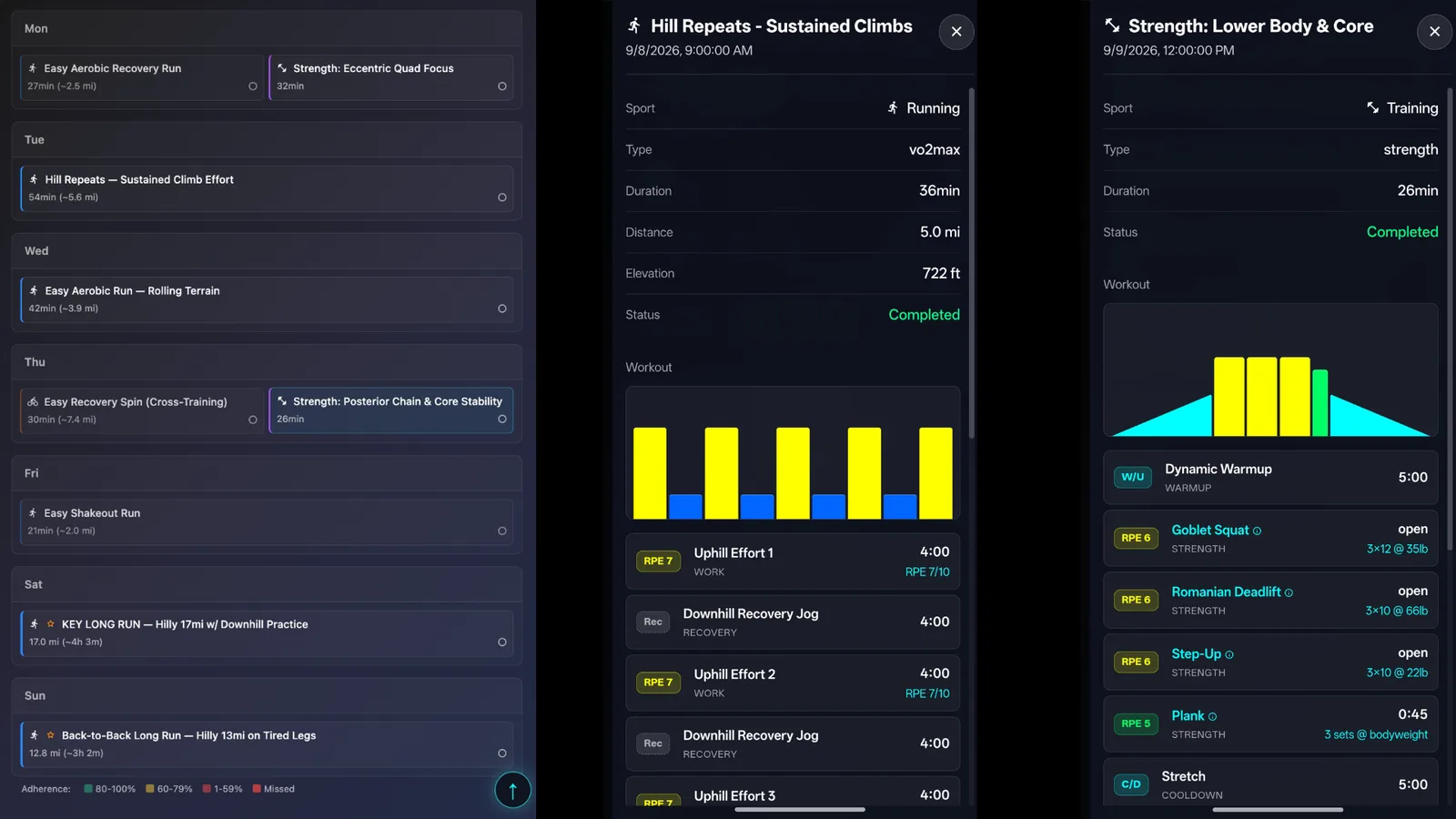
- If you are intermediate or advanced: plans are fully periodized (base, build, peak, taper), tied to a goal date, and sent to your watch as structured workouts with real targets, warm-up, repeats, recoveries, and cool-down. Strength sessions arrive with sets, reps, and loads spelled out. Fit PA supports goals from 5K through ultramarathons. [44]
Road, trail, and terrain
Every activity is analyzed for training stress, grade-adjusted pace, heart-rate and power zones, and terrain, so a hilly trail run is not judged like a flat road run. The coach can also plan around your specific injuries: in Fit PA's product tour, a runner with a grumpy Achilles has hills locked out of the plan until the injury is cleared. [44]
It watches how you respond
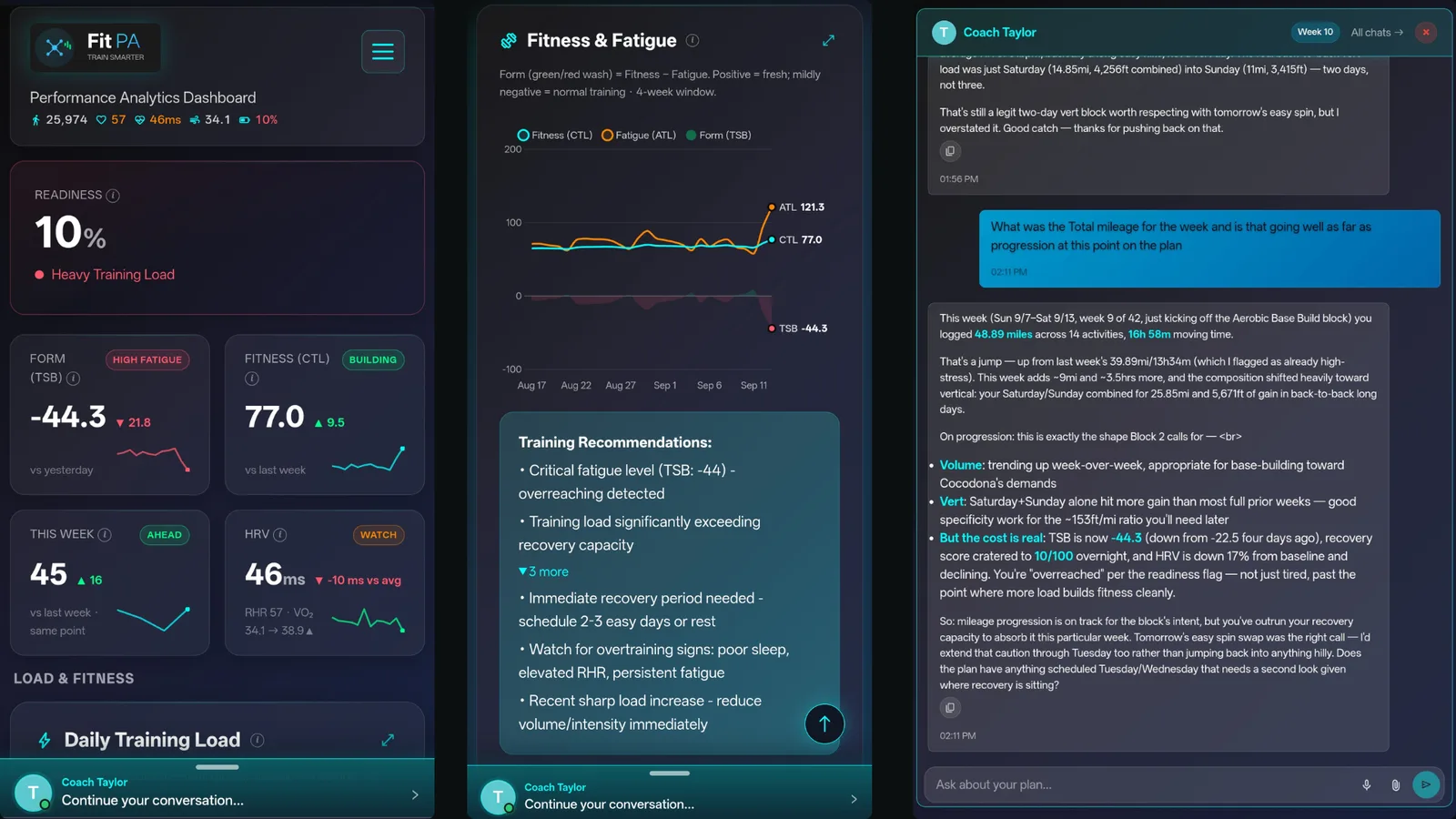
Fit PA reads each workout and each night's recovery data from your watch, including HRV, resting heart rate, and sleep, and turns it into a daily readiness score. It tracks training load (fitness, fatigue, and form) against your plan. When something changes, you can tell the coach and it reworks the plan in the same conversation: an illness, a missed week, a niggle. If you miss a session, the coach can follow up, either per session, at the end of the day, or not at all, whichever you prefer. Injuries and niggles you mention are kept on file and planned around. [44]
These signals are inputs for training decisions, not medical tests. The coach is a training tool and is not a substitute for a physical therapist or doctor.
Nutrition that moves with your training
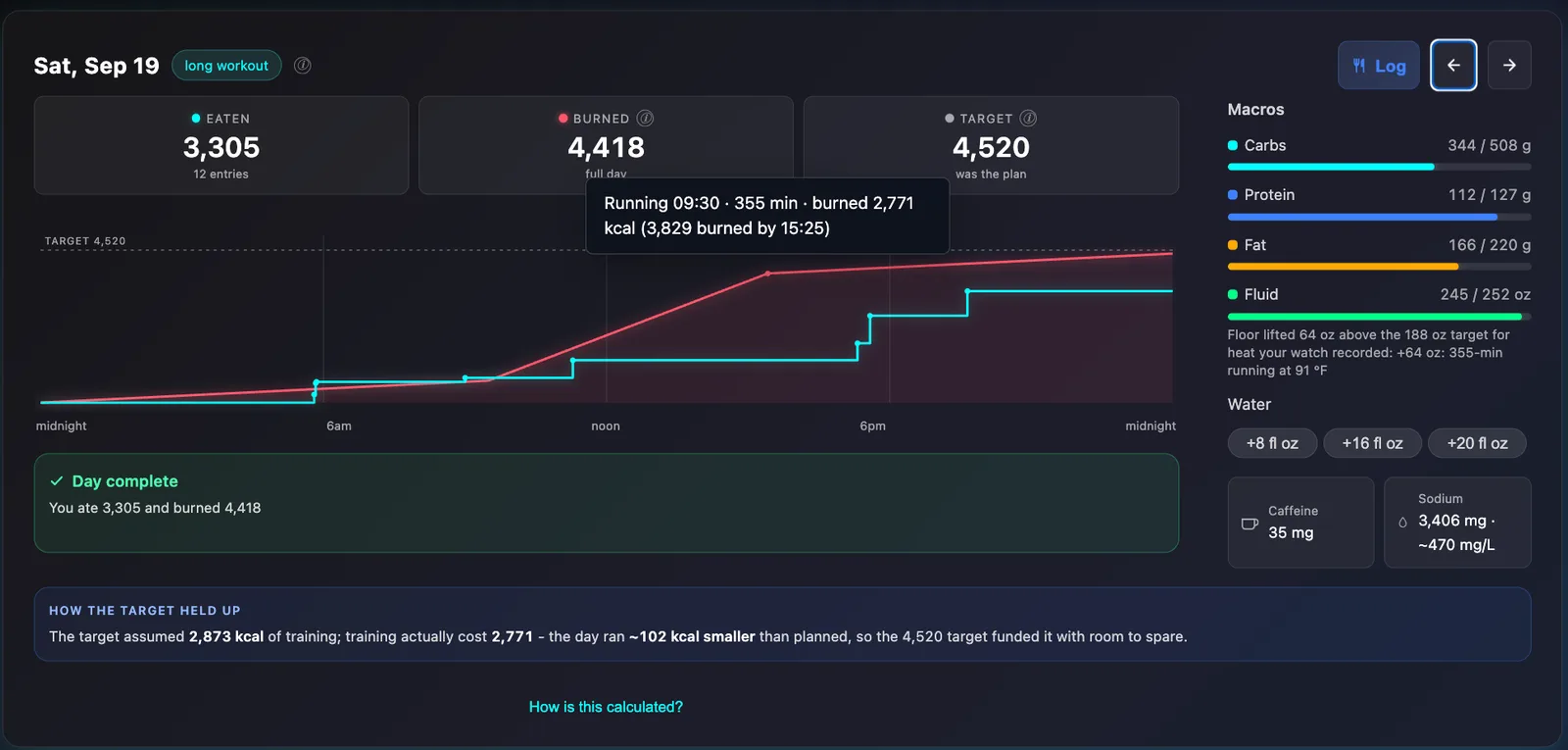
Your daily calorie target is based on your body, your goal, and what your training day looks like, so it rises on a long-run day and drops on a rest day. Fluid and sodium are tracked too. You can log meals by photo, a sentence, or by telling your coach. As this guide shows, eating enough for your training matters for performance and health [31, 32]. Fit PA helps you see whether your fueling matches your training. For individualized medical or dietetic advice, work with a registered dietitian [31]. [44]
Form analysis, and what it does with the findings
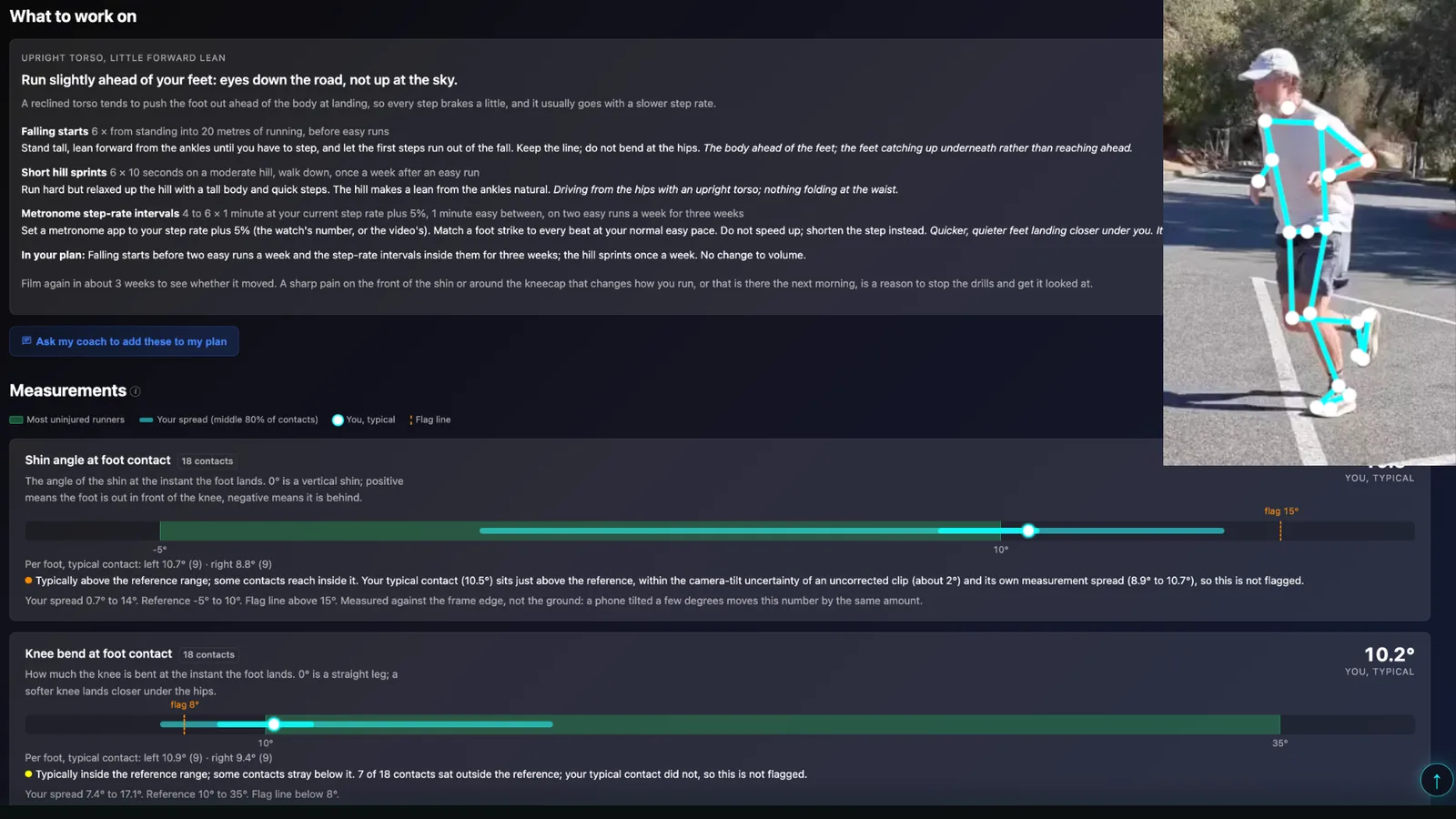
Film about ten seconds of yourself running side-on and upload it. Fit PA measures every foot contact: shin angle and knee bend at landing, forward lean, and step rate, each compared with the range most runners fall into. Flagged moments are shown on your own video with what good looks like drawn beside them. Your coach knows the drills for each pattern and can add them straight into your training plan. Form analysis describes one clip and is never a diagnosis, and it is included with Fit PA's Pro plans. [44]
This connects directly to the science above. Step rate is one of the few form variables with lab evidence tied to joint loading [16, 17]. Keep in mind that the reference ranges describe where most runners sit, not a proven personal optimum, so changes should be gradual.
Bring this article to your coach
You do not have to turn this guide into a plan yourself. In Fit PA, you can paste the link to this article into your coach chat. The coach can read it and reason over it together with what it already knows about you: your training history, your recovery data (HRV, resting heart rate, and sleep), any niggles on file, and what you tell it in conversation. The article becomes context for the coach's judgment, not a rulebook. A good coach uses the parts that fit you, leaves out the parts that do not, and explains the difference. [44]
Try prompts like these:
- "I'm new to running and want a comfortable 5K at about a 12:30 mile. Using my history and recovery data, which parts of this article should I start with, and which should I skip for now?"
- "I have a sore Achilles. Which parts of this article don't fit me right now?"
- "I lift twice a week and run four times. Using this article and my recent training, should I move any sessions?"
- "Where does this article say my situation might differ as a woman (or as a man), and what would you change in my plan?"
If anything the coach suggests conflicts with advice from your doctor or physical therapist, follow your clinician.
How deep you can go depends on your plan. Coaching conversations draw on a monthly allowance, and a long article plus a detailed back-and-forth uses more of it. Paid plans include larger allowances, so members can go further: walking through the whole guide against their own data, comparing options, and having the coach rework their plan around what they learn. Your first coach-built plan is free with no card, and you can see plan options at app.fit-pa.com/pricing. [44]
Try it
Your first coach-built plan is free, no card needed. Connect your watch, tell the coach what you are training for, and let the plan adapt as you do. Start at app.fit-pa.com.
10. The bottom line
- Build a base of easy running and add a small, controlled dose of hard work.
- Lift twice a week and add a little jumping. Do both two-leg and one-leg exercises.
- Fuel your training, sleep enough, and watch for signs of under-recovery.
- Women appear to respond to interval training in similar relative terms to men, and combining lifting with running blunted lower-body strength gains in men but not women in one large meta-analysis. The research base for women is smaller, so watch fueling, iron, and menstrual health closely and personalize.
- Increase intensity gradually. No single rule protects you from injury, so pay attention to your body.
The runner who trains consistently for twelve healthy weeks beats the one who trains hard for three and gets hurt.
Limits of this guide
This guide summarizes published research for general readers. Many trials are small, short, or done mostly in men or in trained athletes, and running-specific evidence in women is limited, including on whether combining lifting and running affects women differently. This guide does not cover perimenopause, menopause, or hormonal contraception, which can also affect training and recovery. It is not medical advice. If you have a health condition, pain, or menstrual changes, talk to a qualified clinician.
References
Author lists marked "verify" were not visible in the sources available while drafting; please confirm against PubMed before publishing.
- Bassett DR, Howley ET. Limiting factors for maximum oxygen uptake and determinants of endurance performance. Med Sci Sports Exerc. 2000.
- Could middle- and long-distance running performance of well-trained athletes be best predicted by the same aerobic parameters? Front Physiol. (verify authors; PMC9253837)
- Nummela A, Paavolainen L, Sharwood K, Rusko H. Neuromuscular factors determining 5 km running performance and running economy in well-trained athletes. Eur J Appl Physiol. 2006. doi:10.1007/s00421-006-0147-3
- Effect of strength training programs in middle- and long-distance runners' economy at different running speeds: a systematic review with meta-analysis. Sports Med. 2024. doi:10.1007/s40279-023-01978-y (verify authors)
- Seiler S, Kjerland GO. Elite endurance athletes' training intensity distribution. Scand J Med Sci Sports. 2006. (verify title)
- The effect of polarized training intensity distribution on maximal oxygen uptake and work economy among endurance athletes: a systematic review. (verify authors; PMC11679080)
- Stöggl T, Sperlich B. Polarized training has greater impact on key endurance variables than threshold, high intensity, or high volume training. Front Physiol. 2014;5:33. doi:10.3389/fphys.2014.00033
- Effects of a 4-week high-intensity interval training on pacing during 5-km running trial. (verify authors and journal; PMC5649866)
- Lock M, Yousef I, McFadden B, Mansoor H, Townsend N. Cardiorespiratory fitness and performance adaptations to high-intensity interval training: are there differences between men and women? A systematic review with meta-analyses. Sports Med. 2023. doi:10.1007/s40279-023-01914-0
- Lindner R, Selva Raj I, Yang A, Zaman S, Larsen B, Denham J. Moderate to vigorous-intensity continuous training versus high-intensity interval training for improving VO2max in women: a systematic review and meta-analysis. Int J Sports Med. doi:10.1055/a-2044-8952
- Aerobic high-intensity intervals improve VO2max more than supramaximal sprint intervals in females, similar to males. Scand J Med Sci Sports. 2023;33(11):2193-2207. doi:10.1111/sms.14470 (verify authors)
- Balsalobre-Fernández C, Santos-Concejero J, Grivas GV. Effects of strength training on running economy in highly trained runners: a systematic review with meta-analysis of controlled trials. J Strength Cond Res. 2016;30(8):2361-2368. doi:10.1519/JSC.0000000000001316
- Eihara Y, Takao K, Sugiyama T, Maeo S, Terada M, Kanehisa H, Isaka T. Heavy resistance training versus plyometric training for improving running economy and running time trial performance: a systematic review and meta-analysis. Sports Med Open. 2022;8:138. doi:10.1186/s40798-022-00511-1
- Eihara Y, Takao K, Sugiyama T, Maeo S, Kanehisa H, Isaka T. The effects of plyometric versus resistance training on running economy and 5-km running time in middle-aged recreational runners. Eur J Sport Sci. 2024;24(12):1820-1829. doi:10.1002/ejsc.12197
- Šuc A, Šarko P, Pleša J, Kozinc Ž. Resistance exercise for improving running economy and running biomechanics and decreasing running-related injury risk: a narrative review. Sports (Basel). 2022;10(7):98. doi:10.3390/sports10070098
- Heiderscheit BC, Chumanov ES, Michalski MP, Wille CM, Ryan MB. Effects of step rate manipulation on joint mechanics during running. Med Sci Sports Exerc. 2011. (verify volume and pages)
- Lenhart RL, Thelen DG, Wille CM, Chumanov ES, Heiderscheit BC. Increasing running step rate reduces patellofemoral joint forces. Med Sci Sports Exerc. 2014.
- Kliethermes SA, Stiffler-Joachim MR, Wille CM, Sanfilippo JL, Zavala P, Heiderscheit BC. Lower step rate is associated with a higher risk of bone stress injury: a prospective study of collegiate cross country runners. Br J Sports Med. 2021;55(15):851-856.
- Sex differences in VO2max and the impact on endurance-exercise performance. Int J Environ Res Public Health. 2022. (verify authors; PMC9105160)
- Mikkonen RS, Ihalainen JK, Hackney AC, Häkkinen K. Perspectives on concurrent strength and endurance training in healthy adult females: a systematic review. Sports Med. 2024;54(3):673-696. doi:10.1007/s40279-023-01955-5
- Walsh NP, Halson SL, Sargent C, et al. Sleep and the athlete: narrative review and 2021 expert consensus recommendations. Br J Sports Med. 2021;55(7):356-368. doi:10.1136/bjsports-2020-102025
- Diaz-Canestro C, Montero D. Sex dimorphism of VO2max trainability: a systematic review and meta-analysis. Sports Med. 2019;49:1949-1956. doi:10.1007/s40279-019-01180-z
- Howden EJ, et al. Females have a blunted cardiovascular response to one year of intensive supervised endurance training. J Appl Physiol. 2015;119:37. doi:10.1152/japplphysiol.00092.2015
- Roberts BM, Nuckols G, Krieger JW. Sex differences in resistance training: a systematic review and meta-analysis. J Strength Cond Res. 2020;34(5):1448-1460. doi:10.1519/JSC.0000000000003521
- McNulty KL, Elliott-Sale KJ, Dolan E, et al. The effects of menstrual cycle phase on exercise performance in eumenorrheic women: a systematic review and meta-analysis. Sports Med. 2020;50:1813-1827. doi:10.1007/s40279-020-01319-3
- Colenso-Semple LM, D'Souza AC, Elliott-Sale KJ, Phillips SM. Current evidence shows no influence of women's menstrual cycle phase on acute strength performance or adaptations to resistance exercise training. Front Sports Act Living. 2023. doi:10.3389/fspor.2023.1054542
- Menstrual cycle phase does not influence training-induced muscle hypertrophy or strength: a randomized controlled trial. Med Sci Sports Exerc. doi:10.1249/mss.0000000000004031 (verify authors and year)
- Liao KF, Nassis G, Bishop C, Yang W, Bian C, Li YM. Effects of unilateral vs. bilateral resistance training interventions on measures of strength, jump, linear and change of direction speed: a systematic review and meta-analysis. Biol Sport. 2022;39:485-497.
- Zhang Z, Shu F, Guo H, Zhang J, Gao J. Unilateral versus bilateral resistance training for explosive jump performance, linear sprint speed, and change-of-direction ability in male basketball players: a systematic review and meta-analysis. Front Physiol. 2026;17:1798477. doi:10.3389/fphys.2026.1798477
- Petré H, Hemmingsson E, Rosdahl H, Psilander N. Development of maximal dynamic strength during concurrent resistance and endurance training in untrained, moderately trained, and trained individuals: a systematic review and meta-analysis. Sports Med. 2021;51(5):991-1010. doi:10.1007/s40279-021-01426-9
- Thomas DT, Erdman KA, Burke LM. Position of the Academy of Nutrition and Dietetics, Dietitians of Canada, and the American College of Sports Medicine: nutrition and athletic performance. J Acad Nutr Diet. 2016;116(3):501-528. doi:10.1016/j.jand.2015.12.006
- Mountjoy M, Ackerman KE, Bailey DM, et al. 2023 International Olympic Committee's consensus statement on relative energy deficiency in sport (REDs). Br J Sports Med. 2023;57(17):1073-1097. doi:10.1136/bjsports-2023-106994
- Does relative energy deficiency in sport (REDs) syndrome exist? (verify authors and journal; PMC11561064)
- Iron deficiency, supplementation, and sports performance in female athletes: a systematic review. J Sport Health Sci. 2024. PMID 39536912 (verify authors)
- Dupuy O, Douzi W, Theurot D, Bosquet L, Dugué B. An evidence-based approach for choosing post-exercise recovery techniques to reduce markers of muscle damage, soreness, fatigue, and inflammation: a systematic review with meta-analysis. Front Physiol. 2018;9:403. doi:10.3389/fphys.2018.00403
- Petersen AC, Fyfe JJ. Post-exercise cold water immersion effects on physiological adaptations to resistance training and the underlying mechanisms in skeletal muscle: a narrative review. Front Sports Act Living. 2021. doi:10.3389/fspor.2021.660291
- Fredette A, et al. The association between running injuries and training parameters: a systematic review. J Athl Train. 2022. (verify authors and citation; PMC9528699)
- Buist I, Bredeweg SW, Van Mechelen W, et al. No effect of a graded training program on the number of running-related injuries in novice runners: a randomized controlled trial. Am J Sports Med. 2008;36(1):33-39.
- Nielsen RO, et al. Excessive progression in weekly running distance and risk of running-related injuries: an association which varies according to type of injury. J Orthop Sports Phys Ther. 2014. doi:10.2519/jospt.2014.5164
- Nielsen RO, et al. Foot pronation is not associated with increased injury risk in novice runners wearing a neutral shoe: a 1-year prospective cohort study. Br J Sports Med. 2014. (verify details)
- Running injuries in novice runners enrolled in different training interventions: a pilot randomized controlled trial. (verify authors and journal; PMID 27486011)
- Risk factors for stress fractures in female runners: results of a survey. Int J Sports Phys Ther. (verify authors and year)
- Incidence of bone stress injury is greater in competitive female distance runners with menstrual disturbances independent of participation in plyometric training. J Sports Sci. 2021. doi:10.1080/02640414.2021.1945184 (verify authors)
- Fit PA website (fit-pa.com), product tour (app.fit-pa.com/tour), and Google Play listing, accessed September 24, 2026. The tour uses a fictional athlete and illustrative numbers.
- Huiberts RO, Wüst RCI, van der Zwaard S. Concurrent strength and endurance training: a systematic review and meta-analysis on the impact of sex and training status. Sports Med. 2024;54(2):485-503. doi:10.1007/s40279-023-01943-9
- Kelly CM, Burnett AF, Newton MJ. The effect of strength training on three-kilometer performance in recreational women endurance runners. J Strength Cond Res. 2008;22(2):396-403. doi:10.1519/JSC.0b013e318163534a
- Vikmoen O, Raastad T, Seynnes O, Bergstrøm K, Ellefsen S, Rønnestad BR. Effects of heavy strength training on running performance and determinants of running performance in female endurance athletes. PLoS One. 2016;11(3):e0150799. doi:10.1371/journal.pone.0150799
- High prevalence of iron deficiency exhibited in internationally competitive, non-professional female endurance athletes: a case study. (verify authors and journal; PMC9778947)